Every campground tells the same story after a windy night: the bargain dome tents with fiberglass poles are the ones folded like lawn chairs by 2:30 AM — one pole snapped, the other bowed until the ceiling is pressed against someone's face — while the well-built tents a few sites over ride it out so quietly their owners wake up asking, genuinely, "Was it windy last night?"
That's the thing about a good tent. You don't notice it. It's the cheap one that makes itself known.
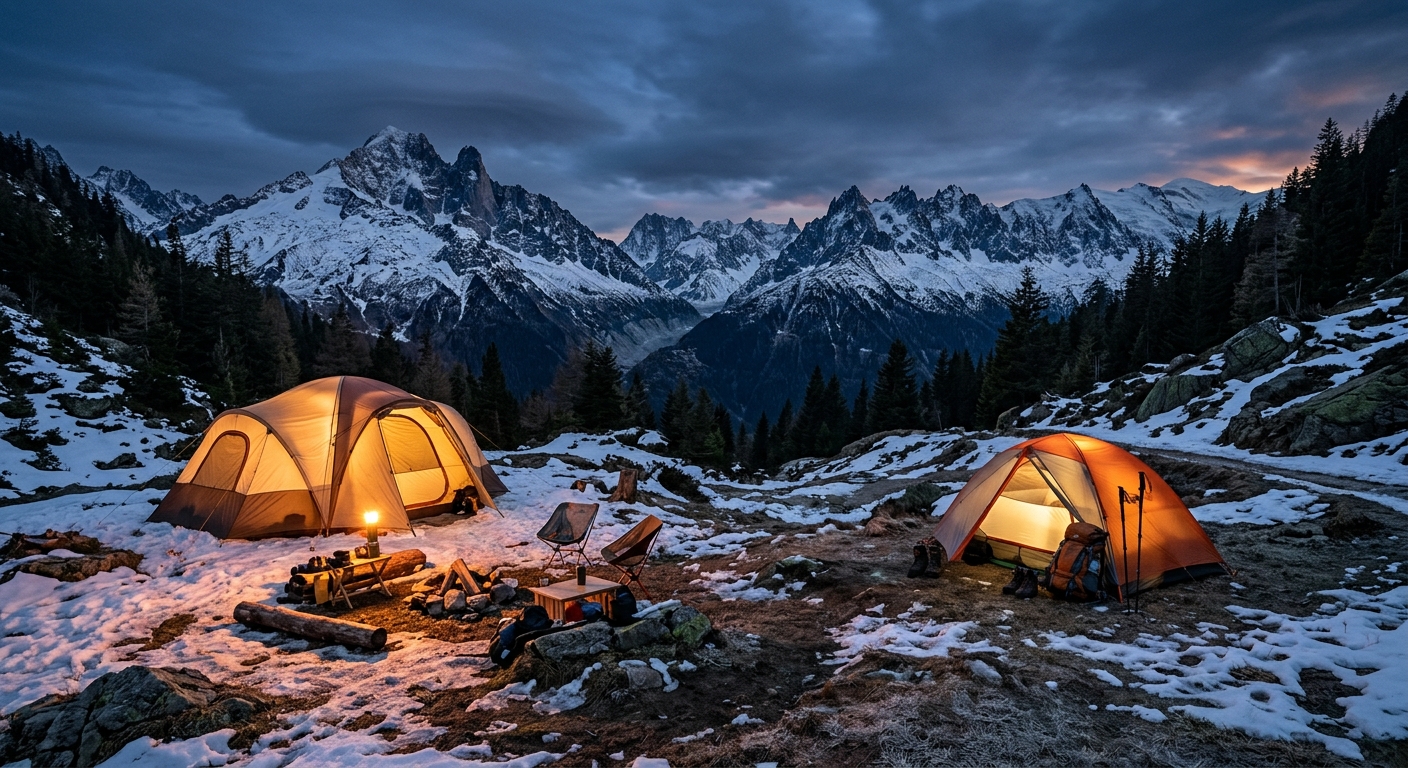
It's the first week of February as we write this, which might seem like an odd time for a tent roundup. Hear us out. Campground reservation windows are opening right now — most national parks release sites six months out, which means the July weekends are being claimed while there's still snow in your yard. Last season's tents are hitting end-of-winter sales. And if you buy now, you get months to pitch the thing in the backyard, learn its quirks, and return it if it's wrong — instead of deciphering pole sleeves by headlamp on night one in June. So here are the six tents we'd recommend for the season ahead, plus everything the spec sheets won't tell you.
Our Top Picks
Best Car Camping Tent: REI Co-op Wonderland 6
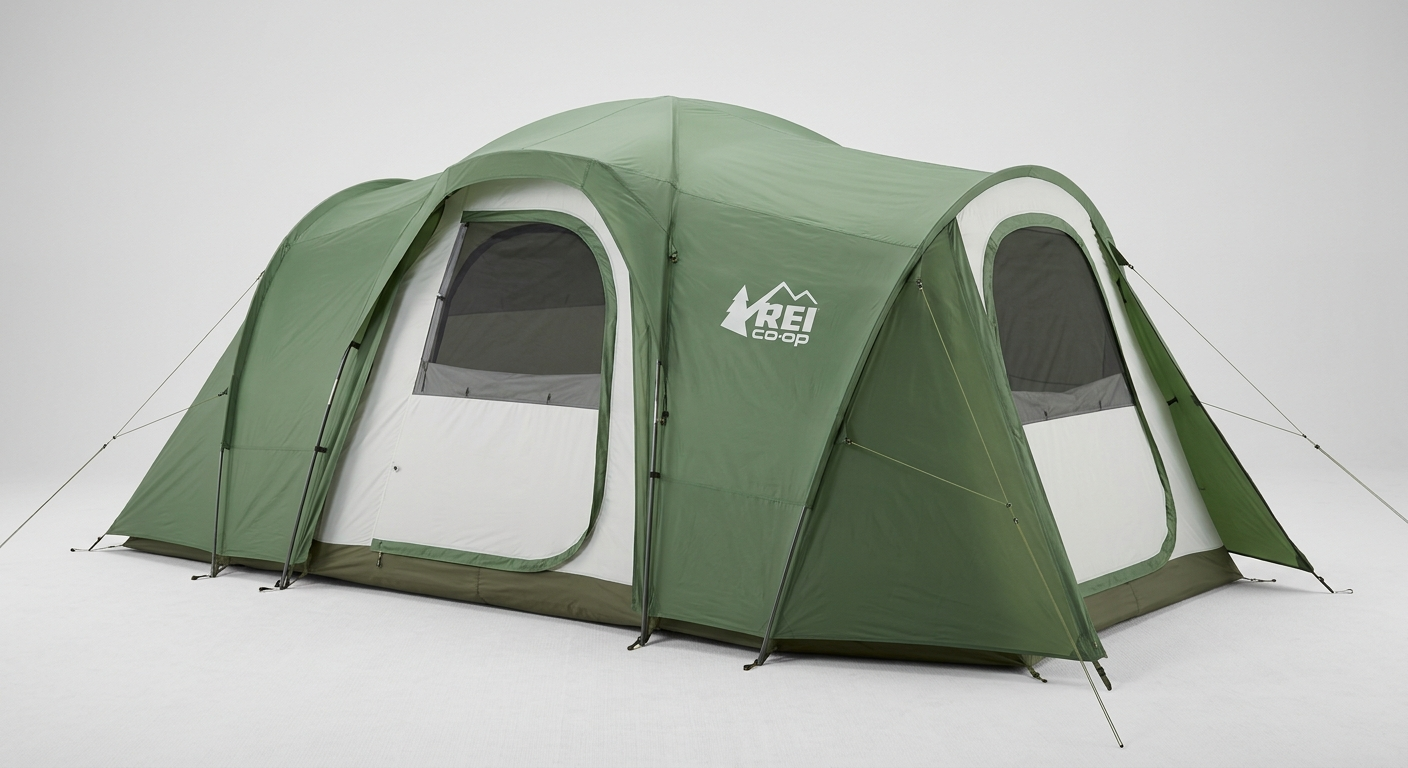
The Wonderland is what happened when REI retired the beloved Kingdom and somehow made it better. It's a tunnel-style palace with a 78-inch peak height, which means everyone in the family can stand up and get dressed like a human being instead of doing the hunched-over camp shuffle. Two enormous doors, walls that are practically vertical, and a zip-in divider that turns one big room into two — worth its weight in gold when the kids' bedtime is 8:00 and yours isn't. The hooped tunnel architecture is the quiet star: it's built to lean and recover in gusty weather, over and over, where boxy cabin tents slowly become kites. The catch? It's a 22-pound duffel the size of a golden retriever, and the first pitch goes a lot smoother with two people. From the second pitch on, it's a 10-minute job.
Price: Premium — check retailer for current pricing | Weight: 22 lb 12 oz | Floor area: 83.3 sq ft | Packed size: 24 x 16 x 13 in | Available at: REI
Best Backpacking Tent: Big Agnes Copper Spur HV UL2
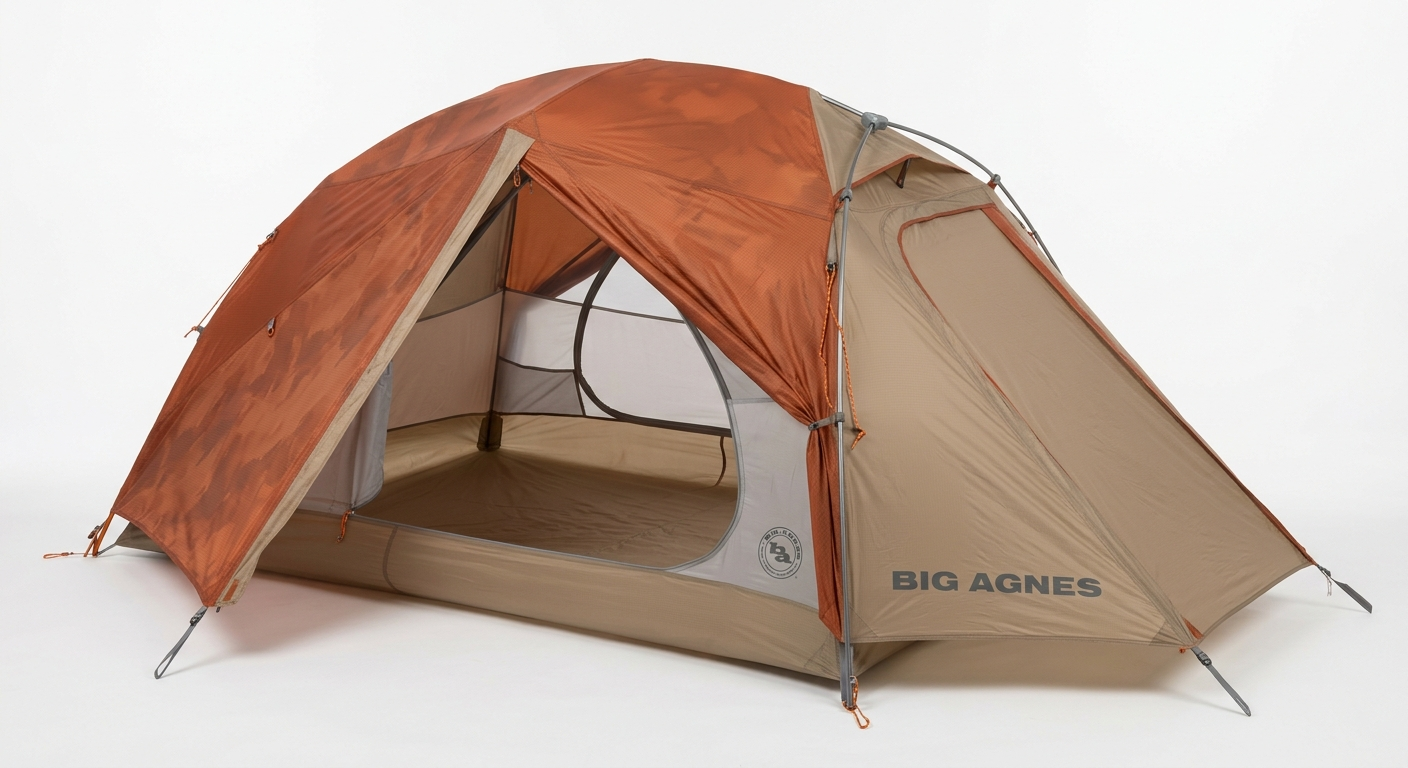
The Copper Spur HV UL2 is the default answer to "what backpacking tent should I get?" for a reason: at 3 lb 2 oz it's light enough that you stop thinking about it, and it's a true freestanding double-wall with two real doors and two vestibules, so nobody's crawling over their partner at 3 AM. The pole architecture is designed for exactly the high-wind scenario desert and alpine campers worry about, and the HV stands for high volume — the steep walls make 29 square feet live like more. A favorite party trick: the vestibule doors roll up into little awnings with trekking poles, turning the tent into a shaded porch for lunch. The one caveat is the featherweight floor fabric. It's tougher than it looks, but this is a tent you clear the sharp pebbles for, not one you throw down on slickrock and hope.
Price: Premium — check retailer for current pricing | Weight: 3 lb 2 oz | Floor area: 29 sq ft | Packed size: 19.5 x 6 in | Available at: Big Agnes, REI, Backcountry
Best Budget Backpacking Tent: REI Co-op Trail Hut 2
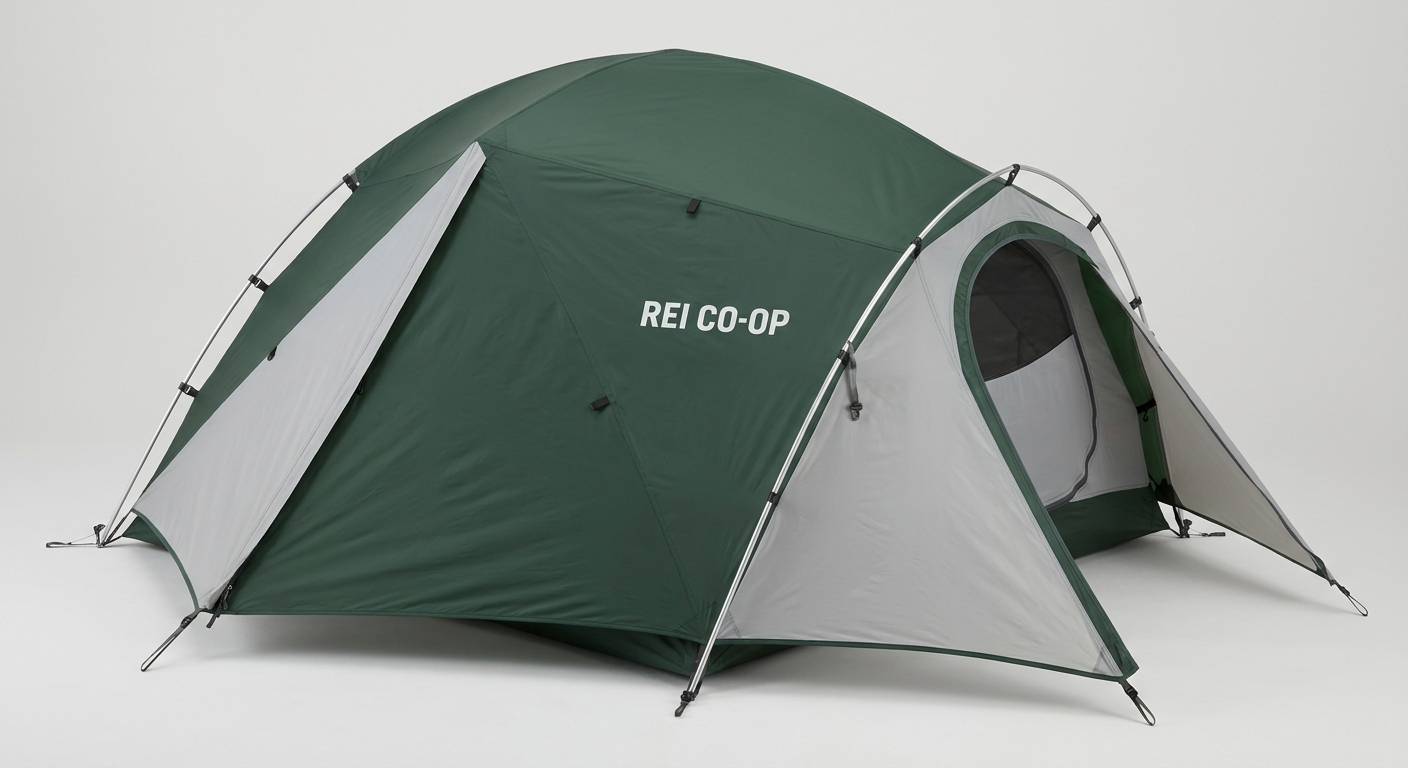
Here's the honest math: the Trail Hut 2 costs a fraction of the Copper Spur, and on a calm July weekend by a lake, it does 90 percent of the same job. It's nearly six pounds, which sounds like a lot until you remember that two people splitting it are each carrying three — roughly a liter of water each. The fabrics are thicker and more forgiving than anything on an ultralight tent, the footprint comes included (a paid add-on with most tents), and the floor is actually bigger than the Copper Spur's. This is the tent we recommend to every friend who wants to try backpacking without committing a car payment to it. If they fall in love with the sport, they can upgrade to the Half Dome SL 2+ (a pound lighter, palatial, still mid-priced) and hand the Trail Hut down to the next friend. It's the gateway tent.
Price: Budget — check retailer for current pricing (footprint included) | Weight: 5 lb 15 oz | Floor area: 31.7 sq ft | Packed size: 20.5 x 7 in | Available at: REI
Best Ultralight Tent: NEMO Hornet Elite OSMO 2P
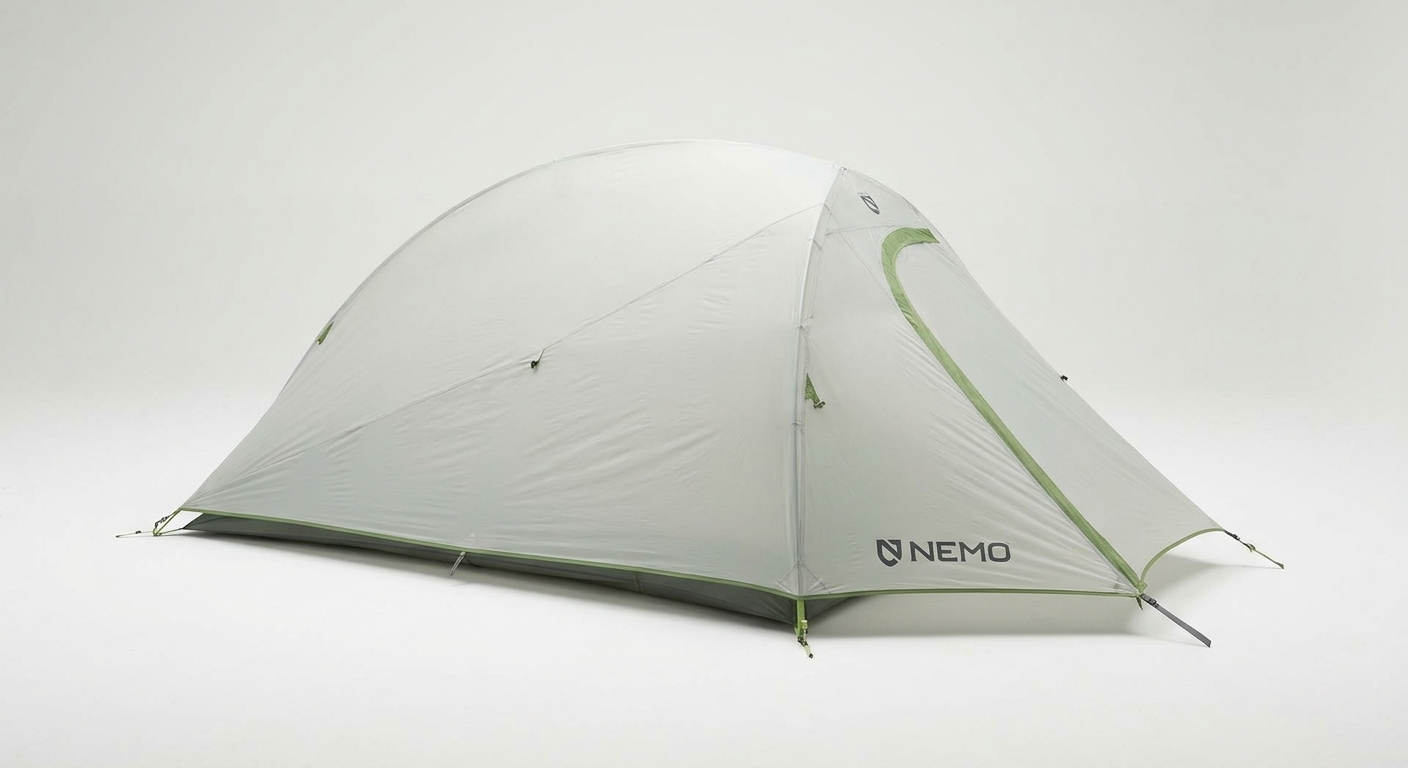
There's a moment on every long trip when you repack your bag at a resupply and hold each item up like it has to justify its existence. The Hornet Elite is the kind of shelter that survives that cut. Two pounds and one ounce, all in — poles, stakes, fly — for a real double-wall tent with a door and vestibule for each side. NEMO's OSMO fabric is the quiet star: it barely sags when it's soaked, so you're not re-tensioning guylines in the rain, and it hits that weight without any chemical coatings we'd rather not sleep under. The little Flybar volumizing clip over the head end adds more usable space than it has any right to. Be clear-eyed about what you're buying: it's snug for two broad-shouldered adults, it's semi-freestanding so the foot end needs two stakes, and it's firmly in premium territory. But per ounce saved, it's the best money in this roundup. If you're deeper down the gram-counting rabbit hole, the Hyperlite Unbound 2P — a Dyneema trekking-pole shelter at barely over a pound from Hyperlite Mountain Gear — is the next step, but the Hornet Elite is where most people should stop digging.
Price: Premium — check retailer for current pricing | Weight: 2 lb 1 oz | Floor area: 27.3 sq ft | Packed size: 19 x 4.5 in | Available at: NEMO, REI, Backcountry
Best for Shoulder Seasons: MSR Access 2
Since it's February, let's talk about the tent for people who don't want to wait until June. True four-season mountaineering tents are heavy, expensive, and stuffy below treeline — overkill unless you're actually roping up. MSR built the Access 2 for that huge, messy middle ground: early-spring trips when a surprise six inches of snow is on the table, late-October weekends in the Rockies, ski-touring basecamps. Its poles are built to take a snow load that would fold a summer tent, the mostly-solid canopy traps noticeably more warmth than a mesh-heavy three-season design, and it still comes in at four pounds — barely more than many regular backpacking tents. It has a loyal following among ski tourers and early-season backpackers for exactly the surprise-graupel-squall nights that summer tents hate. It is not a tent for the Himalaya, and MSR doesn't pretend otherwise. It's a tent for stretching your season by two months on either end, which for most of us is worth a lot more.
Price: Premium — check retailer for current pricing | Weight: 4 lb 1 oz | Floor area: 29 sq ft | Packed size: 18 x 6 in | Available at: MSR, Backcountry
Best Family Tent: The North Face Wawona 6
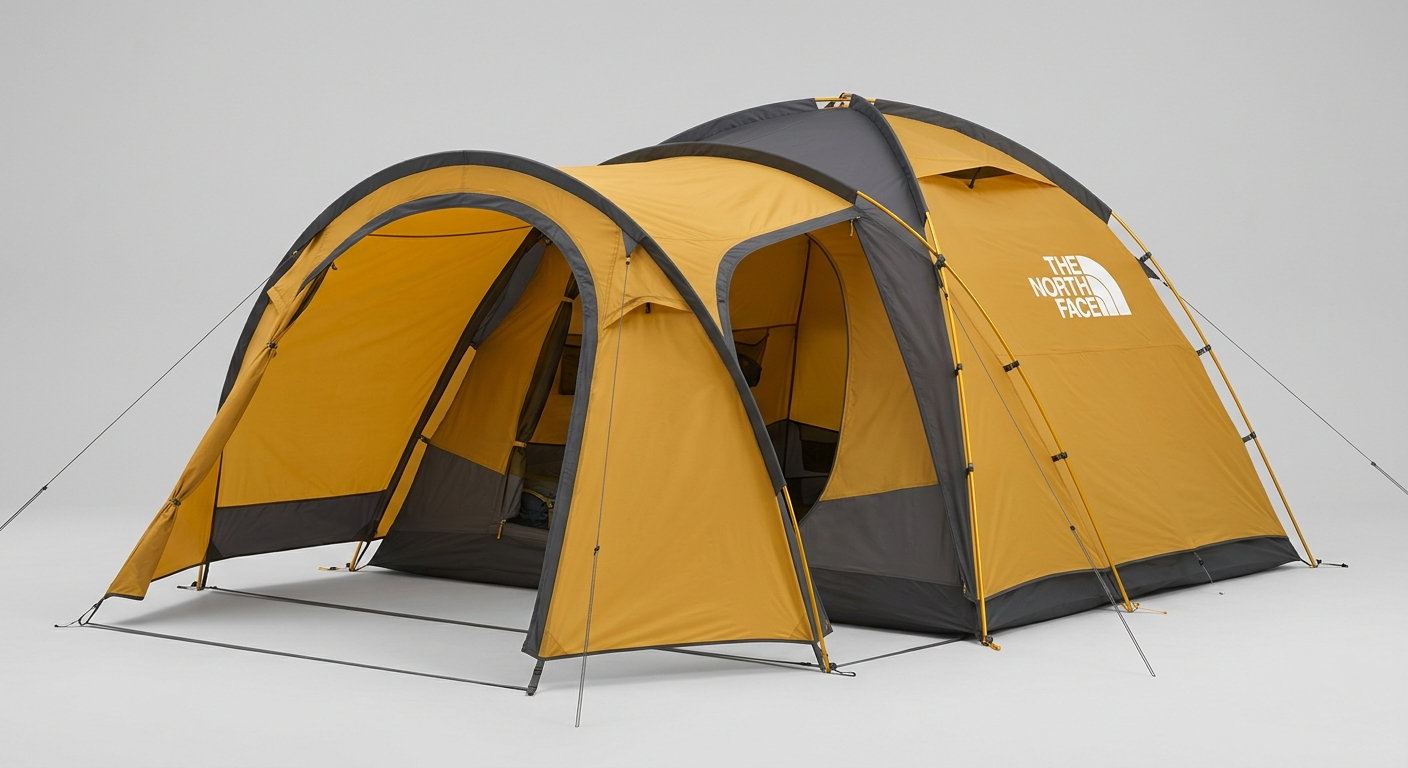
Every family tent claims to be livable. The Wawona 6 actually is, and the reason is the gigantic front vestibule — nearly 45 square feet of covered, floorless space that works as a mudroom, a gear garage, a dog bedroom, and a rainy-morning breakfast nook where the kids can play in the dirt while staying dry. Inside, the main room is nearly 87 square feet with a 76-inch ceiling and mesh pockets everywhere, so the flashlights and stuffed animals all have a home. The single-wall-style construction means fewer parts and a faster pitch than most tents this size — one practiced adult can get it standing while the other unloads the car. It undercuts most of the big-name competition by a meaningful margin, and it routinely dips lower on sale. If your camping crew includes anyone who naps in a pack-and-play, start here.
Price: Mid-range — check retailer for current pricing | Weight: 20 lb 15 oz | Floor area: 86.9 sq ft (plus 44.7 sq ft vestibule) | Packed size: 32 x 10 in | Available at: The North Face, REI, Backcountry
How to Choose: What the Spec Sheet Won't Tell You
Subtract one from the capacity. This is the golden rule of tent shopping. A "2-person" tent fits two people who like each other very much and none of their gear. A 4-person fits a couple, their stuff, and maybe a dog. A 6-person is right for a family of four. Manufacturers rate capacity by lining up sleeping pads edge-to-edge with zero room for elbows, boots, or dignity — nobody actually camps that way. Buy for the number of people, then add one.
Vestibules are where you actually live. Floor area gets all the attention, but the vestibule — that covered porch under the fly — is where your muddy boots, wet pack, and 6 AM stove session happen. Two doors with two vestibules beats one bigger vestibule every time for two campers; midnight exits stop being a diplomatic incident.
Freestanding or not? A freestanding tent (like the Copper Spur or Wonderland) stands on its poles alone, so you can pitch it on a wooden platform or slickrock and pick the whole thing up to shake the sand out. Non-freestanding and semi-freestanding shelters (like the Hornet Elite or the Hyperlite) save serious weight by borrowing structure from stakes or trekking poles, but they demand ground that holds a stake and a little more practice. First tent? Go freestanding. Counting grams on your third? You already know.
Learn the two weights. "Packed weight" is everything in the box; "trail weight" or "minimum weight" is just the tent body, fly, and poles — no stakes, no stuff sacks. Brands love to advertise the second one. When you compare tents, compare packed weights, because you're not staking your tent out with good intentions.
Take Care of It and It'll Outlive Your Car
Never pack a tent away wet. We'll say it louder for the people loading the car in the rain: mildew kills more tents than storms, rocks, and bears combined, and it takes about 48 hours to start. Packing up wet at the campsite is fine — everyone does it — as long as the tent goes up again in the garage or living room that night to dry. Yes, it looks ridiculous pitched between the couch and the TV. Do it anyway.
The footprint question, answered honestly. A footprint (the fitted groundsheet sold separately, usually $40-70) is cheap insurance under a delicate ultralight floor like the Copper Spur's or the Hornet's, or on rough, rooty ground. Under a burly budget or car camping tent, a $10 sheet of Tyvek from the hardware store does the same job, cut a couple inches smaller than the floor so it doesn't funnel rainwater underneath. What a footprint is not: mandatory. Plenty of thru-hikers skip one entirely and just pick their sites well.
Store it loose, not stuffed. The compression sack is for the trail. At home, a tent lives loosely in a big cotton sack or a milk crate so the coatings don't stick to themselves. And don't leave it pitched in the backyard for weeks "to air out" — UV quietly cooks fly fabric, and a summer of sun can age a tent more than years of normal use.
Book the Site, Then the Tent
If you take one thing from this roundup, let it be the timing: the best tents and the best campsites both disappear by late spring, and February is when you can still have your pick of both. Pitch whatever you buy in the yard at least once before opening weekend — the first setup is the slowest one, and it's better to be slow on the lawn than in the rain.
And when you're ready to buy, clicking through to REI, Big Agnes, NEMO, Backcountry, or any other retailer from Epic Outdoor earns you entries in our gear sweepstakes automatically — same prices, no extra steps, just a bonus shot at winning a full camp setup on gear you were buying anyway. No purchase necessary — see the Official Rules for free entry details. Here's to a season of nights you sleep straight through, no matter what the wind does.