Ask any backpacker about the best meal of their life and you won't hear about a restaurant. You'll hear about something like a slightly charred quesadilla, eaten off a frisbee at 9,200 feet after a 14-mile day — hands shaking, the cheese a questionable brick of pepper jack that spent three days in a warm pack — and how they'd trade a lot of fancy dinners to eat it again. That's the secret about camp cooking: the bar is low, the ceiling is high, and everything tastes 40% better outside. But "everything tastes better outside" is not an excuse to eat sad, crunchy-in-the-middle ramen for a whole weekend. With a little gear strategy and about four recipes, you can eat genuinely well out there. Here's the whole playbook.
The Stove Tier List
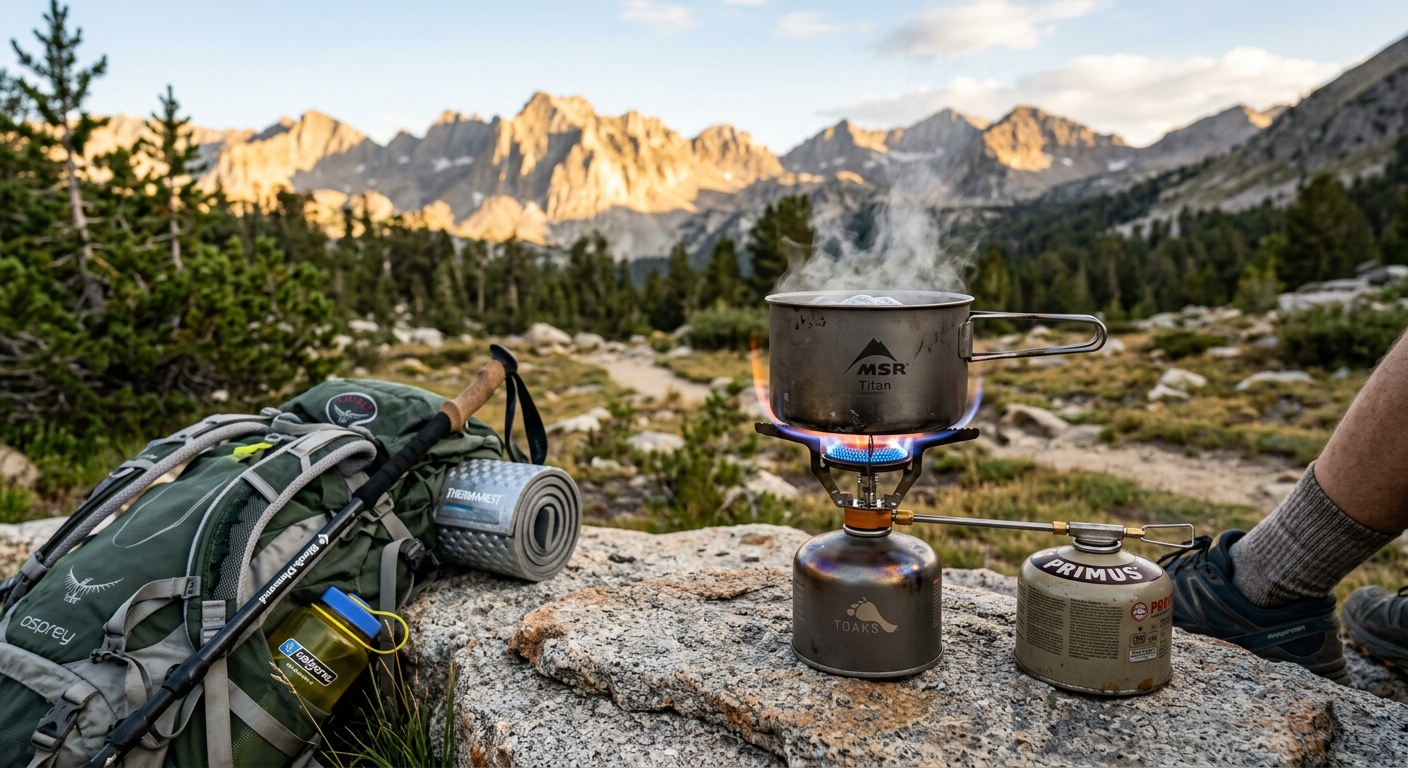
Your stove decision comes down to one question: how far are you carrying it?
Backpacking: The MSR PocketRocket
If you're carrying everything on your back, get the MSR PocketRocket Deluxe and stop overthinking it. It weighs 2.9 ounces, boils a liter of water in about three and a half minutes by MSR's numbers, and folds down smaller than a lighter-and-a-half. It has a reputation for surviving seasons of being dropped on granite, rained on, and fished out of creeks, and still lighting on the first try. The Deluxe version has a pressure regulator and a built-in igniter, which matters more than you'd think when it's 38 degrees and your fingers have stopped cooperating.
The honest limitation: a canister stove is basically a tiny, ultra-efficient blowtorch. It's perfect for ramen, dehydrated meals, oatmeal, and coffee. Try to gently simmer anything on one and you'll end up with a scorched pot and a sad dinner.
Car Camping: The Two-Burner
The moment your car is within 100 feet of your campsite, the game changes completely. A propane two-burner is the difference between "meals" and "cooking." Two burners means coffee going on one side while eggs cook on the other, which prevents the single most common camp argument we know of. Look for one with at least 10,000 BTU per burner and decent wind panels — wind is the silent killer of camp breakfast. The classic Coleman or the Camp Chef Everest 2X are both solid picks, and you can find them at REI or Backcountry. This is one category where mid-range is genuinely fine; the expensive ones simmer better, and that's the whole difference.
Fire Cooking: The Solo Stove
Then there's the third tier, which is less about efficiency and more about joy. A Solo Stove fire pit with the cooking attachments turns dinner into the evening's entertainment. The double-wall airflow design gets you cooking-grade coals in about 20 minutes instead of the hour a regular fire ring takes, and the low-smoke burn means you're not doing the campfire shuffle every time the wind shifts. Sear a steak over one and you will never fully respect your kitchen stove again.
Cast Iron 101 (Put Down the Soap)
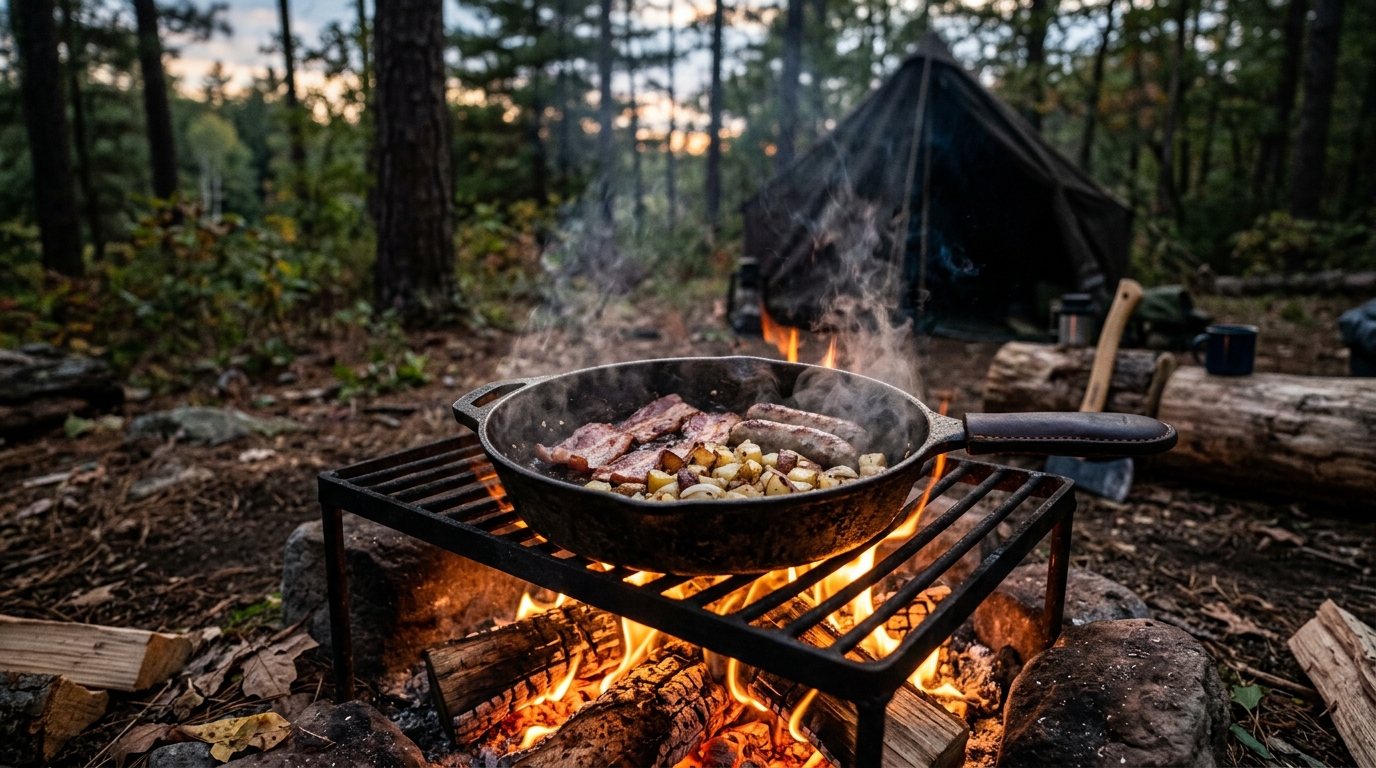
A 10-inch cast iron skillet costs about $25, weighs a ridiculous 5 pounds, and will outlive you. It is the single best cooking tool at any campsite where weight doesn't matter. It goes directly onto coals, holds heat like a grudge, and gets better every trip you use it.
Caring for cast iron at camp is actually easier than doing dishes at home:
- While the pan is still warm, scrape out food bits with a spatula or a plastic scraper.
- Wipe it out with a paper towel. If something's really stuck, add a splash of hot water and scrub with coarse salt — the salt is your abrasive.
- Dry it completely over the stove or fire for a minute. Water is the actual enemy, not dirt.
- Wipe in a thin coat of oil while it's warm. Any neutral cooking oil works.
Notice what's missing: soap. Here's the real story, because the internet loves to fight about this. Modern dish soap won't destroy a well-established seasoning the way old lye-based soaps did — at home, a quick soapy wash is fine. But at camp, soap creates a problem: you need to rinse every trace of it somewhere, and soapy gray water is bad news for soil and streams. The salt-scrub method cleans just as well, uses a quarter of the water, and leaves nothing behind but a pan that's ready for tomorrow's bacon. So at camp, the old-timers are right for a new reason.
One warning worth underlining: never, ever pour cold water into a screaming-hot cast iron pan. Thermal shock can crack it — a lesson plenty of campers have learned over a sad, two-piece skillet.
The Four Recipes That Carry Every Trip
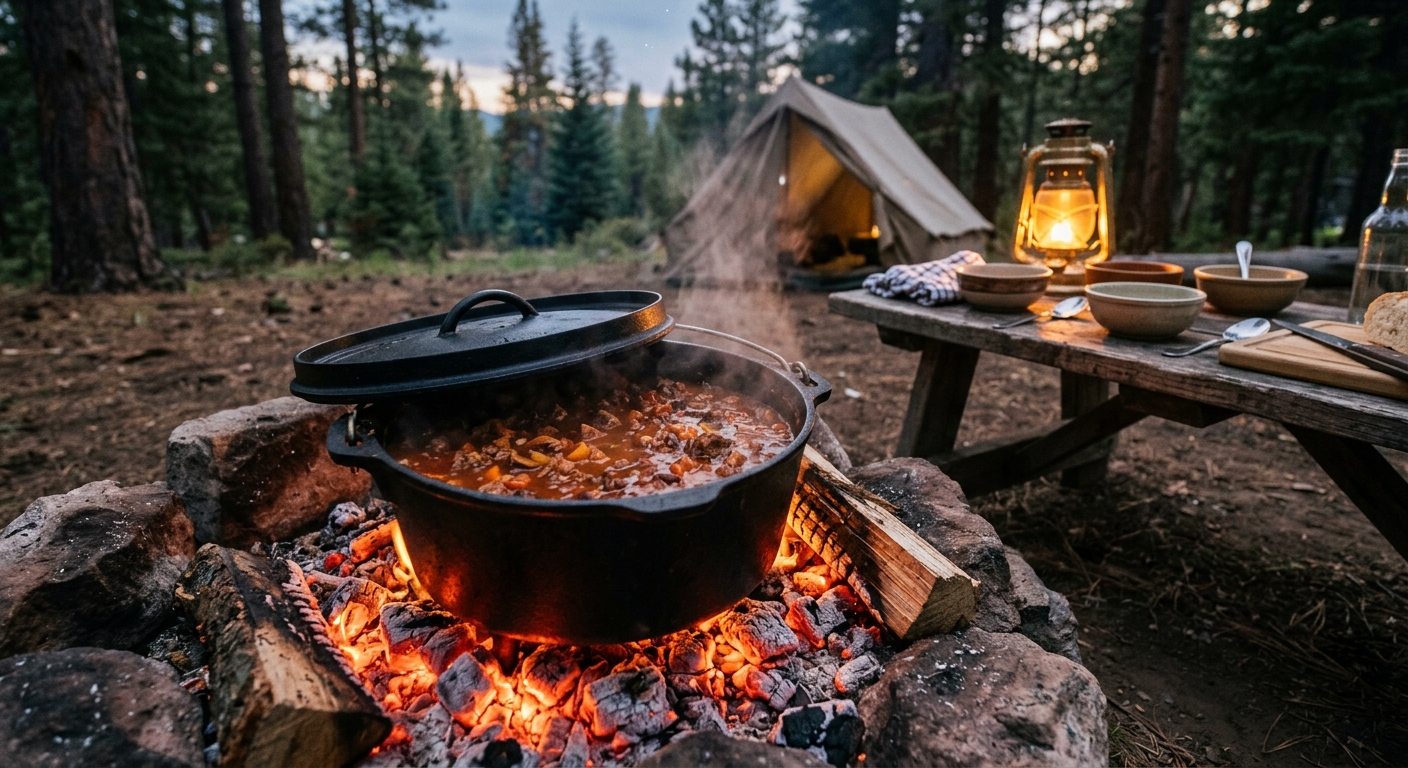
You do not need a camp cookbook. You need four reliable moves you can execute tired, in the dark, with one headlamp between three people.
Foil Packet Potatoes
The recipe that turns fire skeptics into fire cooks. Cube 2 pounds of baby potatoes, toss with olive oil, a diced onion, way too much garlic, salt, and smoked paprika. Divide onto heavy-duty foil (double-wrap — single-wrapped packets tear, and a torn packet is a small campfire tragedy), seal tight, and nestle into the coals for 25 to 30 minutes, flipping once. Add sliced kielbasa to make it a full dinner. The bottom layer gets crispy in a way that will start arguments over who gets the corner pieces.
Dutch Oven Chili
Our snow-day, rain-day, everything-day dinner. One note before you start: you want a true camp dutch oven — cast iron, three little legs, flanged lid (the Lodge 6-quart Deep Camp is the standard) — not the enameled one from your kitchen, which will crack and break your heart. Brown a pound of ground beef in it right on the coals, dump in two cans of beans, a can of fire-roasted tomatoes, a diced onion, chili powder, cumin, and a squeeze of whatever hot sauce made it into the bin. Lid on, 8 to 10 coals underneath, a few on top, and walk away for 45 minutes while you set up camp chairs and argue about tomorrow's hike. Serve over instant rice or scoop it with tortilla chips. It's nearly impossible to ruin, which is exactly the quality you want in a camp recipe.
Camp Quesadillas
The highest ratio of morale-to-effort in outdoor cuisine. Tortillas travel indestructibly, hard cheese survives days in a cooler, and a cast iron pan over medium coals does the rest. Two minutes a side, pressed with a spatula. Add leftover chili from last night and you've invented camp fusion. This is also the best kid-camping recipe in existence, because children who refuse everything will eat a quesadilla.
The Breakfast Scramble
Pre-crack a dozen eggs into a wide-mouth Hydro Flask or a screw-top bottle at home — no shell casualties in the cooler, no juggling eggs at 7 a.m. Sauté whatever peppers and onions survived the trip, pour in the eggs, and finish with cheese. Wrap it in a tortilla if you're hiking, eat it out of the pan if you're not. We are not above eating it out of the pan.
The Cooler Game
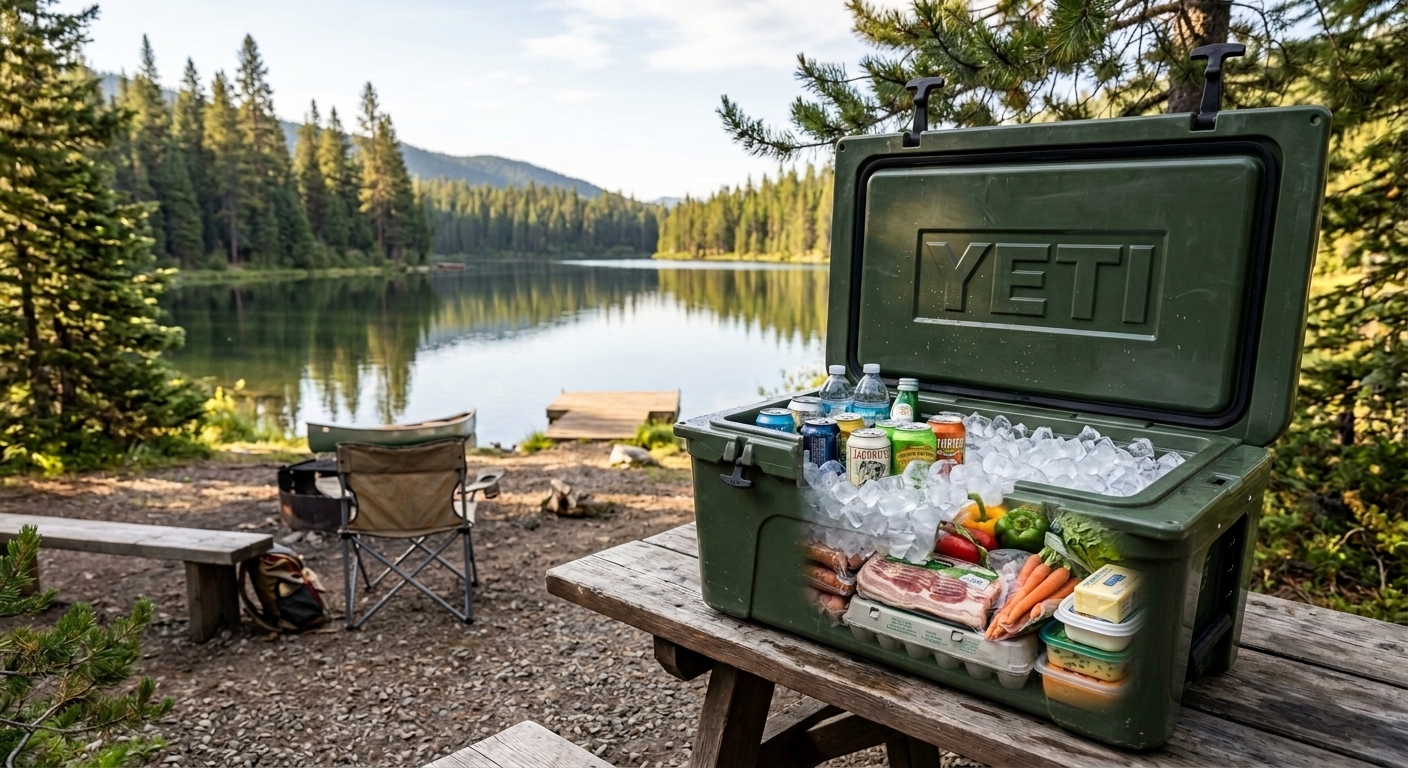
Great camp cooking is really a refrigeration problem, and most people lose it before they leave the driveway. Three rules change everything:
Block ice beats cubes, every time. Cubes have enormous surface area, which means they melt fast and turn your cooler into cold soup by day two. A block melts slow and steady. The move: freeze water in a couple of half-gallon jugs at home. They're your block ice on the way in and your drinking water on the way out. Use cubes only in the gaps for the first-day chill.
Pre-chill everything. A warm cooler and warm groceries will burn through half your ice before you've left town. Refrigerate the drinks the night before, freeze whatever meat you're not eating day one (it thaws slowly in the cooler, acting as more ice), and if you can, throw a sacrificial bag of ice in the empty cooler the night before to cool the insulation itself.
Open it like it costs money. Because in ice, it does. The pro move is two coolers: one for drinks that gets opened forty times a day, one for food that gets opened three times. Your food cooler will stay cold days longer.
This is also the category where spending real money actually pays off. A YETI Tundra 45 with block ice and disciplined packing can genuinely hold safe food temperatures for days on end in summer. That's not marketing — that's the difference between rotomolded walls with two-plus inches of insulation and a $30 cooler's inch of styrofoam. If your trips run three days or more, it stops being a luxury.
Cleanup and the Bear Rules
Nobody writes poetry about camp dishes, so here's the fast version: heat your wash water while you eat (pot on the stove, zero extra effort), scrape plates into the trash before washing, and do the wash-rinse dance 200 feet from any water source. Strain the food bits out of your gray water into the trash, then broadcast the water wide.
Food storage is not optional, and it's not really about you — a bear that learns campsites equal calories is a bear that eventually gets put down. So: every scented thing (food, trash, toothpaste, that lip balm in your pocket) goes into the bear locker, a hard-sided bear canister, or — only where it's allowed — your car with the windows fully up. Never the tent. And know your area: in places like Yosemite and grizzly country, cars don't count as storage, because the local bears have learned to peel a door open like a soup can. Use the metal lockers. Do all of this every night and every time you leave camp, not just when it feels bear-y out — the night you skip it is the night the raccoons hold their convention.
Coffee: Worth Doing Right
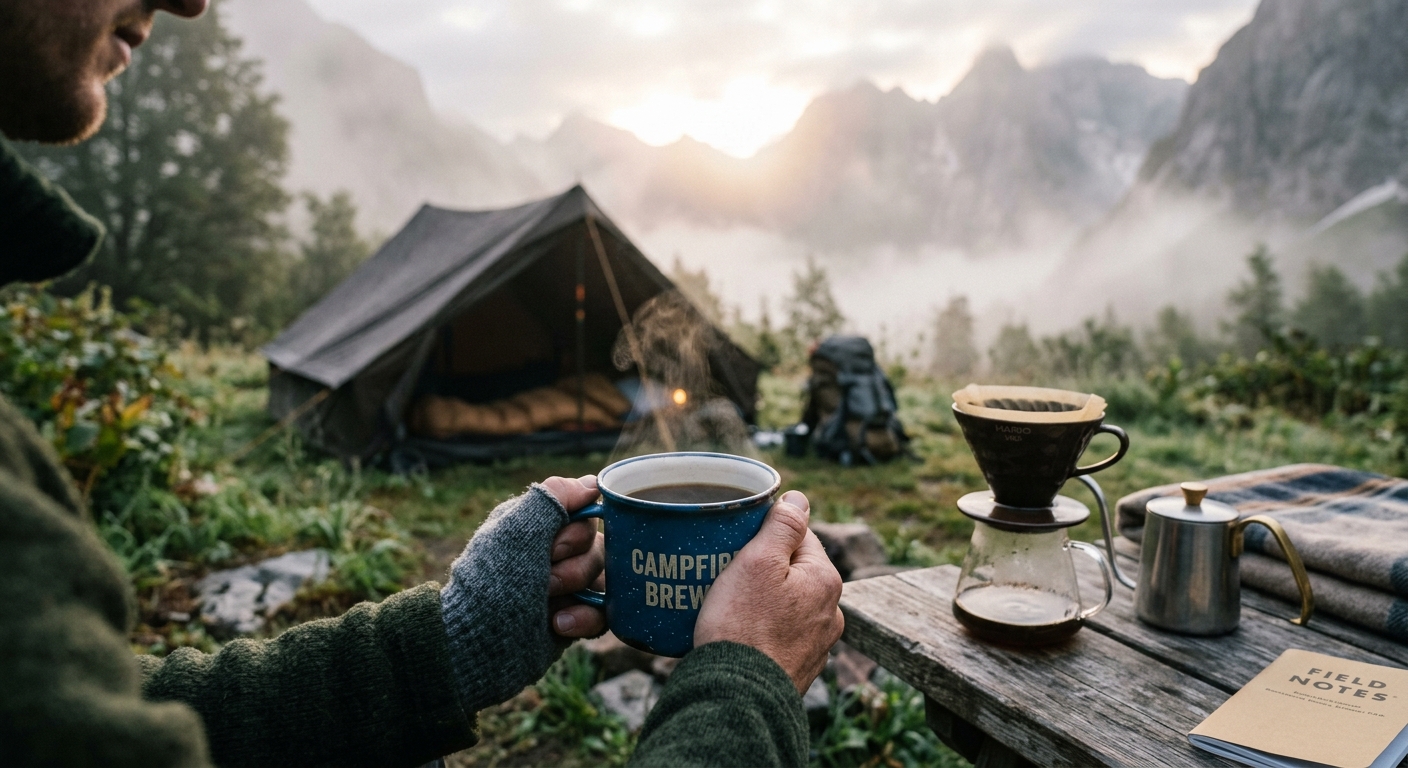
We have strong opinions here, because bad camp coffee is a nearly universal experience.
Instant coffee has gotten shockingly good — packets from the likes of Alpine Start and Kuju are real coffee now, not punishment — and it's the right call for backpacking, where every gram counts. For car camping, the AeroPress is the undisputed champion: nearly indestructible, brews a legitimately excellent cup in 90 seconds, and cleans up with one push. A collapsible dripper like the Sea to Summit X-Brew is a fine second place for making several cups in a row.
And then there's cowboy coffee — grounds straight into the pot of hot water, settled with a splash of cold water, poured with confidence and a little grit in the last sip. Objectively, it's the worst coffee on this list. It's also somehow the best, on the right morning, by the right fire. We can't explain it and we've stopped trying.
Whatever you brew, put it in an insulated mug. Camp mornings are for slow coffee, and enamel mugs — charming as they are — go from scalding to stone cold in about eleven minutes.
Go Eat Well Out There
Camp cooking rewards exactly one thing: a little planning. Four recipes, a stove that matches your trip, block ice, and a cast iron pan you treat right — that's the whole system. The quesadilla at 9,200 feet is waiting.
One last thing, and then we'll let you get to your packing list: if any of this gear was headed for your cart anyway — a PocketRocket, a cooler upgrade, the dutch oven you've been circling — shopping through Epic Outdoor's retailer links earns you sweepstakes entries with every dollar. Same gear, same prices, plus a shot at winning a serious pile of new kit. No purchase necessary — see the Official Rules for free entry details. Happy cooking out there.