It's a scene that plays out at trailheads everywhere: the newcomer on a brand-new, wallet-flattening full-suspension bike walking most of the trail, while the group-ride leader on a nine-year-old aluminum hardtail with a squeaky chain floats down rock gardens like they're bike paths. That contrast is the most important lesson in this whole sport: the rider is the suspension. Everything else is negotiable.
So if you're standing at the edge of the mountain biking rabbit hole, wondering how much this is going to cost you and whether you're going to break your collarbone — welcome. Here's the honest version of the getting-started guide, the one we wish someone had handed us.
The First-Bike Question: Hardtail vs. Full Suspension
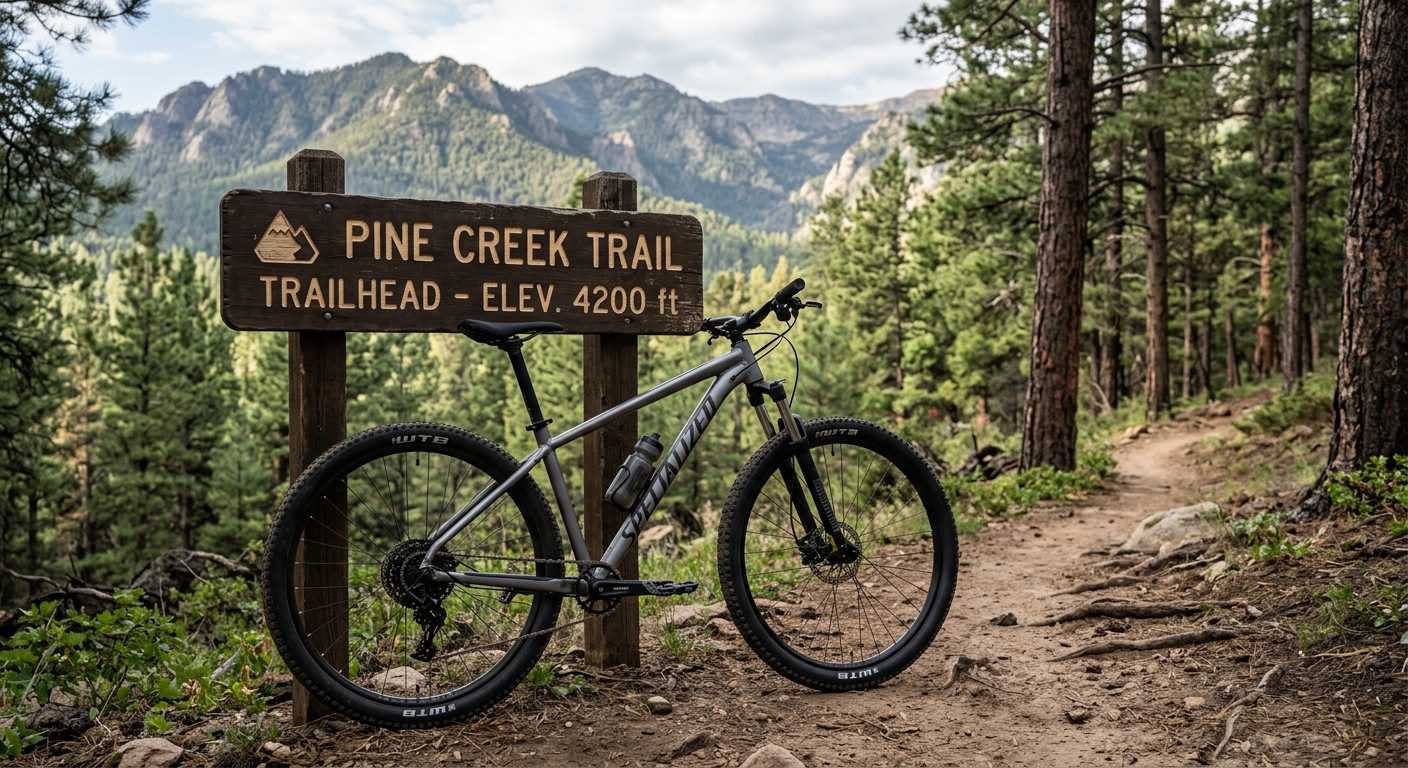
Walk into any bike shop and you'll be surrounded by full-suspension bikes that look like they escaped from a moto showroom. They're gorgeous. They're also, for your first year, mostly the wrong answer.
Buy the hardtail. Here's why we're so confident about that:
- A hardtail teaches you to ride. With no rear suspension to paper over your mistakes, you learn to pick lines, get light over roots, and let the bike move underneath you. Those skills transfer to every bike you'll ever own. Riders who start on cushy full-suspension rigs often hit a skills wall because the bike keeps bailing them out of mistakes they never actually learn to fix.
- The money math is brutal. A $1,500 hardtail is usually a genuinely good bike — decent fork, reliable drivetrain, modern geometry. A $1,500 full-suspension bike is usually a collection of compromises with a rear shock bolted on. Suspension pivots, bearings, and a shock all cost money, and at that price point it comes out of everything else.
- Less to maintain. No pivot bearings to service, no rear shock to rebuild. As a beginner, your maintenance skills are at their weakest exactly when your bike is taking the most abuse.
Take the $1,000+ you saved and spend it on a skills clinic, a proper helmet, and a season of riding. We promise you'll be faster by fall than the person who spent it all on rear travel. Something like a Trek Marlin or Roscoe from Trek Bikes is exactly the kind of honest first bike we're talking about, and the Co-op Cycles DRT hardtails at REI punch well above their price too.
The exception: if you're 100% certain you'll be riding lift-served bike parks or genuinely rough, rocky terrain every weekend, and your budget starts around $2,500, a full-suspension bike starts making sense. Most new riders aren't there yet.
What Actually Matters on a First Bike
Bike marketing is a firehose of acronyms. Here's the short list of things that genuinely change your ride, in order:
Modern geometry
This is the big one, and it's free. Over the last decade, mountain bikes got longer, slacker (the front wheel sits further out in front of you), and lower. What that actually means on the trail: the bike feels rock-solid when things get steep, and you're far less likely to fly over the handlebars. A 2026 entry-level hardtail with modern geometry will descend better than a 2015 race bike that cost four times as much. When you're comparing bikes, a head tube angle somewhere around 65–66 degrees is the modern sweet spot for trail riding.
A dropper post
A dropper post lets you lower your saddle with a handlebar lever, so it's out of the way when the trail gets steep. If you've never used one, it sounds like a gimmick — then you ride one steep descent with the saddle out of the way and wonder how anyone ever lived without it. It's the difference between descending confidently and descending with a saddle punching you in the chamois. If your bike doesn't come with one, budget $200–250 to add it before you upgrade anything else.
Tubeless tires
Most decent bikes now come with tubeless-ready rims and tires. Set them up tubeless (any shop will do it for about $60 with sealant). You'll stop pinch-flatting, and you can run lower pressures, which means more grip. More grip means more confidence, and confidence is the entire game in year one.
That's the list. Carbon frames, electronic shifting, boutique wheels — all lovely, all irrelevant to whether you have fun this season.
Protect the Parts That Don't Heal
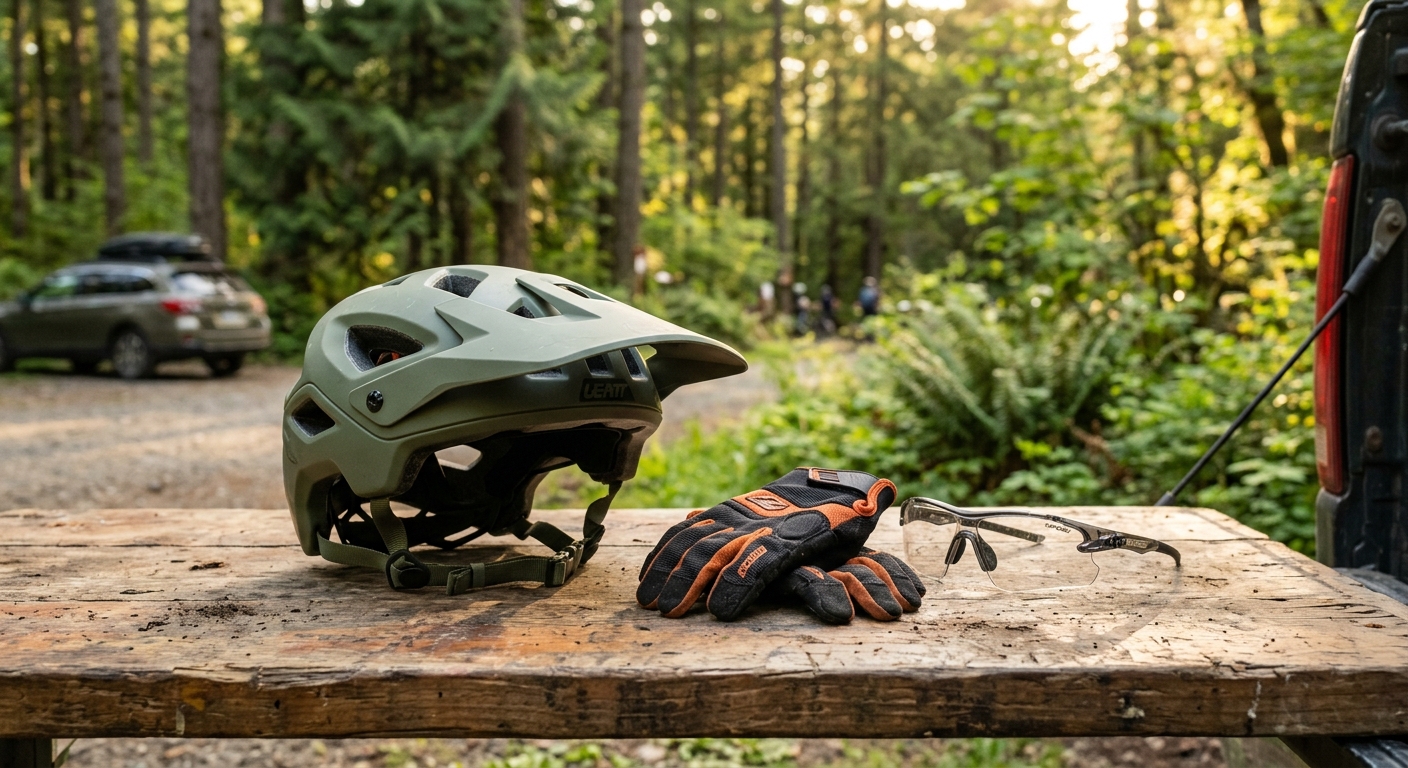
Let's keep this simple.
Helmet: non-negotiable, and buy new. Get a modern trail helmet with extended coverage at the back of the head and MIPS or similar rotational protection — expect to spend $80–150. Smith Optics makes some of our favorites (the Engage MIPS is a perennial pick), and evo and REI both carry a deep bench of them. Never buy a used helmet; foam damage is invisible, and this is the one piece of gear standing between a routine crash and a life-changing one.
Gloves. Your hands hit the ground first in almost every fall. A $25 pair of gloves also fixes the sweaty-grip problem and the blister problem. Just wear them.
Glasses. Trail riding fires dust, mud, and the occasional low branch directly at your eyeballs. Clear or lightly tinted lenses are best for tree-covered trails where sunglasses are too dark. Sunski and Smith both make options that won't fog the moment you stop moving — the Smith Bobcat with a clear lens is a trail classic.
Knee pads are a smart add once you start riding faster, but the helmet-gloves-glasses trio is the day-one kit.
Flat Pedals First (Yes, Really)
Somewhere along the line, clipless pedals became a badge of seriousness, and new riders rush into them way too early. Start on flats — good ones with real pins, like the affordably priced RaceFace Chester — paired with flat-pedal shoes that have sticky rubber soles. Five Ten Freeriders are the default answer for a reason.
Flats teach you real technique: how to keep your feet heavy and planted, how to bunny hop by actually lifting the bike instead of yanking it up with your cleats, and how to bail instantly when things go sideways. That last one matters more than anything in your first season. Plenty of genuinely fast riders — including some pros — never leave flats. If you switch later, fine. But earn it on flats first.
Trail Etiquette: Don't Be That Rider
Trails are shared, and mountain bikers are usually the newest guests at the party. A few rules keep everyone happy:
- Riders going uphill have the right of way. They're suffering; you're having fun. Pull over, put a foot down, let them grind past.
- Yield to hikers and horses. Slow way down, say hi, and follow instructions around horses — a spooked horse is dangerous for everyone.
- Don't skid. Locking up your rear wheel tears trenches in the trail that turn into ruts and drainage problems. It's also slower than proper braking. Nobody is impressed.
- Stay off muddy trails. If you're leaving ruts, the trail is too wet. Come back in two days.
- Announce yourself. A friendly "hey, two more riders behind me!" does more for mountain biking's reputation than any advocacy campaign.
The greeting thing is real, by the way. Every hiker you smile at is a future vote for trail access.
Finding Trails You'll Actually Enjoy
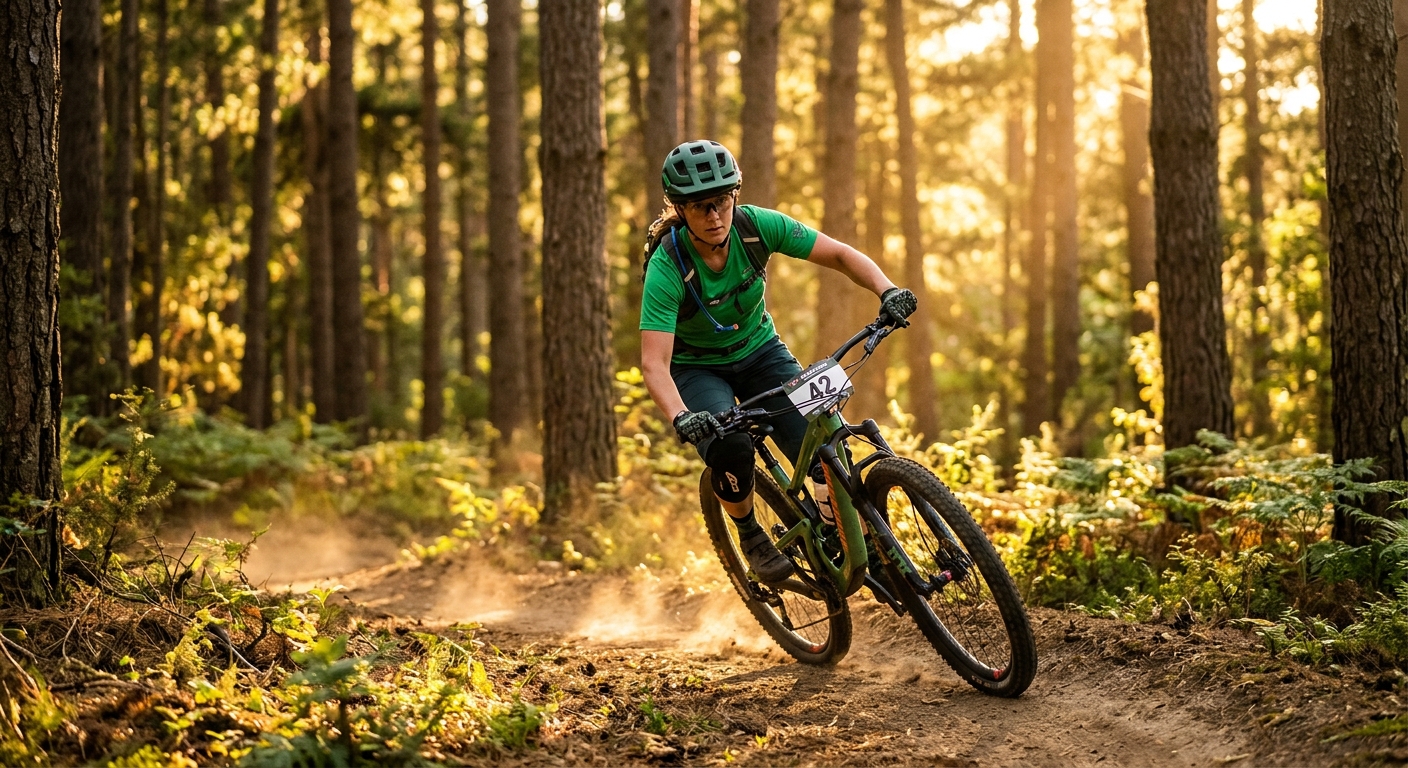
Mountain bike trails use ski-style ratings: green circles are beginner, blue squares are intermediate, black diamonds will humble you. Your first month should be almost entirely green, and there's no shame in that — flowy green singletrack is some of the most fun riding there is at any skill level.
Trailforks is the app to download. It's the closest thing to a global trail database, with difficulty ratings, recent condition reports, and user comments that tell you what the rating doesn't ("blue but the last descent is spicy"). MTB Project is a solid second opinion.
Better than any app: your local bike shop. Ask when their group rides are and whether there's a no-drop beginner ride. "No-drop" means nobody gets left behind, and it's the single fastest way to find the good trails, learn the etiquette, and meet the people who'll drag you out riding when your motivation dips.
Skills Beat Upgrades, Every Time
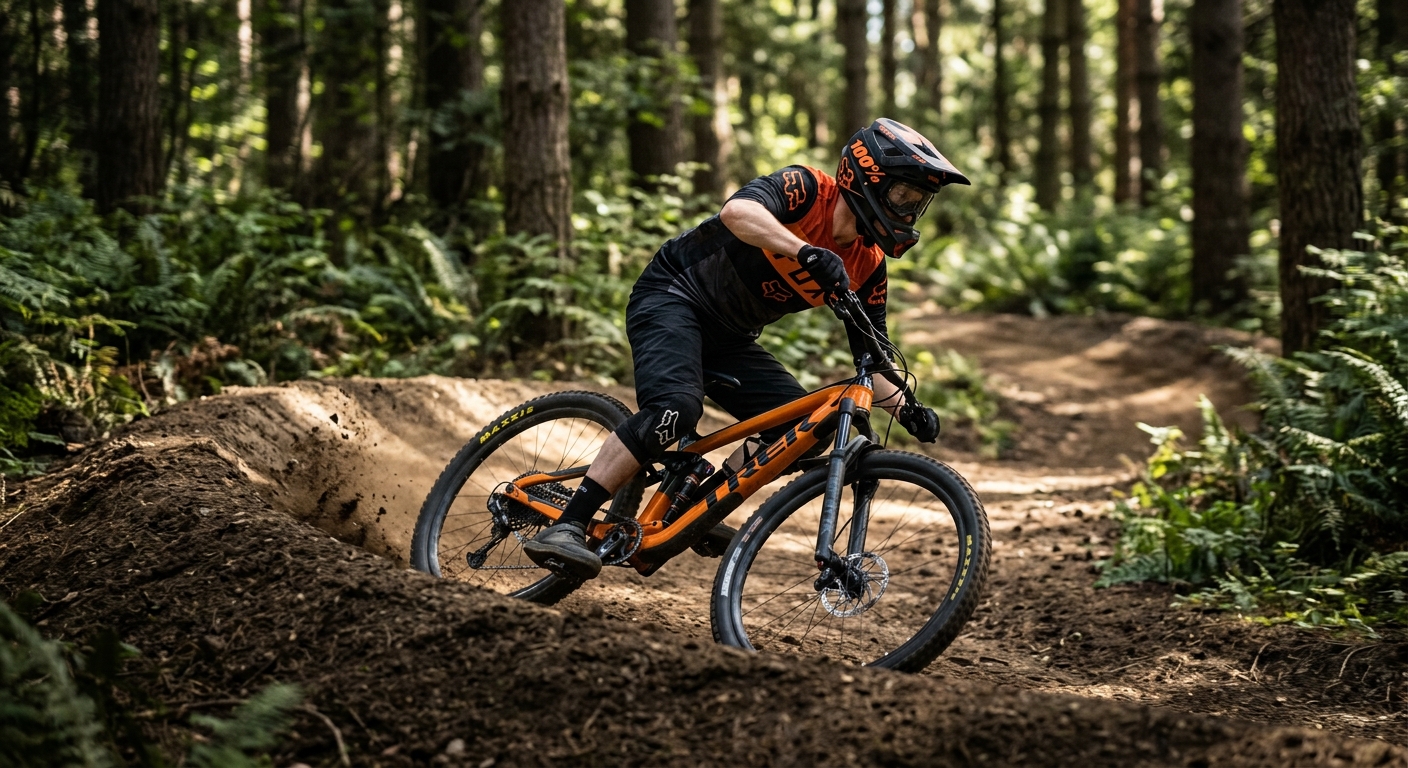
Here's the uncomfortable truth about the upgrade itch: a $500 wheelset will make you maybe 1% faster. These three habits will make you 50% faster, and they're free.
Brake before the corner, not in it. Do your slowing down while you're still going straight, then release the brakes and let the bike roll through the turn. Braking mid-corner stands the bike up and pushes the front wheel out — it's the number one cause of beginner crashes on turns. Two more braking notes while we're here: the front brake has most of your stopping power, so use one finger on each lever and squeeze smoothly, and never grab a panicked handful.
Eyes up, looking where you want to go. Your bike follows your gaze — it's almost spooky. Stare at the rock you're afraid of and you will hit that rock, guaranteed. Look 15–20 feet down the trail at the line you want, and the obstacle just slides underneath you.
Level pedals, heels down, standing up. When the trail gets rough or steep, get off the saddle, put your cranks at 3 and 9 o'clock, drop your heels, and bend your elbows and knees. This "ready position" turns your body into the suspension your hardtail doesn't have. It feels weird for two rides and then it becomes the only way you ride.
Take one skills clinic — most trail networks and shops run beginner sessions for $75–150 — and you'll compress a year of trial and error into an afternoon.
The Ten-Minute Maintenance Habit
You don't need a workshop. You need two habits:
Check your tire pressure before every ride. Get a cheap digital gauge. Most beginners run way too much air; start around 24–26 psi front and 26–28 psi rear (a bit less if you're lighter, more if you're heavier) and adjust from there. Tire pressure is the cheapest suspension upgrade in existence.
Lube your chain every few rides. Wipe the chain with a rag, drip one drop of chain lube onto each roller, spin the cranks, wipe off the excess. Ninety seconds. A dry, squeaky chain wears out your whole drivetrain, and drivetrains are expensive.
Learn to fix a flat at home before you have to learn it three miles from the trailhead. Then carry a spare tube, a tire lever, and a mini pump on every ride — a small hip pack or frame strap holds all of it. Everything else — brake bleeds, suspension service — is what your local shop is for. Being a regular there pays for itself.
Should You Buy Used?
Honestly? Often, yes. Mountain bikes depreciate fast, and a lightly used two-year-old bike at 60% of retail is one of the best deals in the sport. But used-bike shopping as a beginner is a minefield, so a few guardrails:
- Stick to hardtails. Fewer moving parts means fewer expensive surprises. A worn suspension pivot on a used full-suspension bike can cost hundreds to sort out.
- Check the geometry year. Look up the model — if it's older than about 2018, the geometry is likely dated and you're better off passing, even at a great price.
- Squeeze the brakes, shift through every gear, and look at the chainring teeth. Sharp, shark-fin-shaped teeth mean the drivetrain is toast. That's a $150+ deduction or a walk-away.
- When in doubt, pay a shop $50–75 for a pre-purchase inspection. Cheapest insurance you'll ever buy.
If the used market feels like too much homework, last year's models at Competitive Cyclist and evo routinely go for 25–40% off, with a warranty. That's often the sweet spot between used-bike prices and new-bike peace of mind.
One more practical note: once you own the bike, you have to get it to the trail. A proper hitch rack like the Thule T2 Pro XTR from Thule is one of those unglamorous purchases you'll never regret — wrestling a muddy bike into a hatchback gets old by the third weekend.
Your First Season, Roughly
Buy the hardtail. Wear the helmet. Ride flats. Start on greens, brake before the corners, keep your eyes up, and say hi to the hikers. Lube the chain. By October you'll know exactly what kind of rider you are — and if you decide you want that full-suspension bike after all, you'll finally be the rider who deserves it.
And when you're picking up the helmet, the gloves, or the bike itself: if you shop through Epic Outdoor's retailer links — Trek Bikes, REI, evo, Competitive Cyclist, and friends — every dollar earns you entries in our gear sweepstakes. No purchase necessary — see the Official Rules for free entry details. You were buying the helmet anyway. Might as well get a shot at winning the bike to go with it.