It's the classic October cold-snap story: two campers four feet apart, one shivering at 3 AM in a perfectly good 20-degree bag — teeth-chattering, check-your-phone-and-regret-it shivering — while the other sleeps like a rock in a bag rated about the same. The difference isn't the bags. It's the pads: a threadbare foam pad from a college backpacking trip on one side, three and a half inches of insulated air on the other. That's the sermon this whole guide preaches: your sleep system is a system, and most people spend their money on the wrong half of it.
So this is our guide to sleeping warm outside — the bags and pads we'd recommend without hesitation. It's built for late spring, when the forecast says 48 and the meadow says 34.
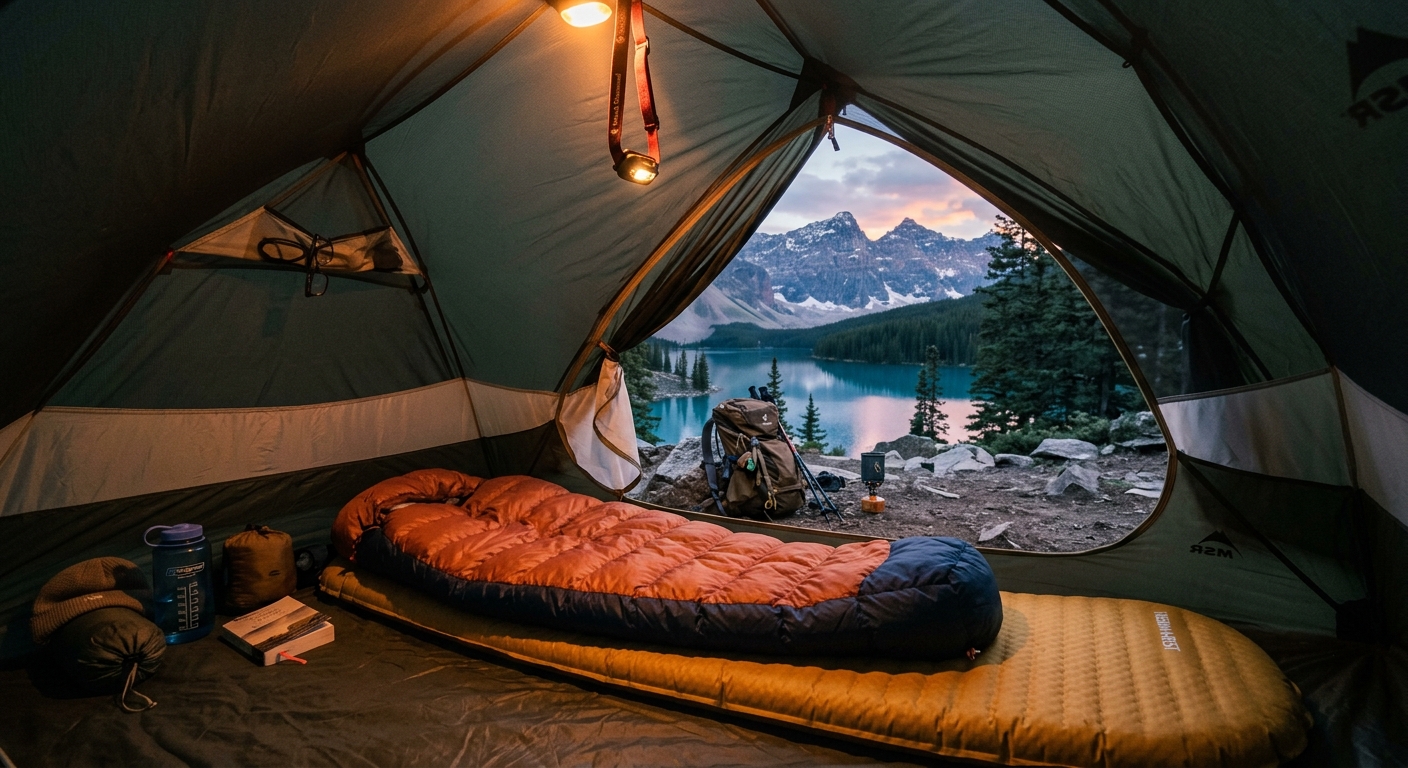
First, the Part Nobody Tells You: The Pad Matters More Than the Bag
Here's the physics, in one sentence: the insulation under you gets crushed flat by your body weight, so your bag does almost nothing beneath you — the pad is doing all of that work. Lie on frozen ground with a $600 down bag and a bad pad and the ground will win every time. The earth is an enormous, patient heat sink, and it will pull warmth out of you all night through whatever you put between it and your back.
Pad insulation is measured in R-value, and it's blessedly simple: higher number, more insulation between you and the ground. That's it. R-value 1 to 2 is a summer-only pad. R 3 to 4 covers three-season camping for most people. R 4.5 and up is what you want for shoulder seasons, cold sleepers, and anyone who's ever woken up at 3 AM wondering why their back is cold when their bag is warm (now you know). Unlike temperature ratings, R-values are additive — stack a closed-cell foam pad under an inflatable one and you can add the numbers together, which is the cheapest warmth upgrade in all of camping.
If your budget forces a choice, buy the good pad and the okay bag. Not the other way around.
How to Read a Temperature Rating (Believe the Comfort Number)
Sleeping bag ratings confuse everyone, so here's the decoder ring. Most bags are tested to an ISO standard that spits out two numbers: a comfort rating — the temperature at which a cold-ish sleeper stays comfortable — and a lower limit — the temperature at which a warm sleeper can survive the night curled up, technically not hypothermic, and thoroughly miserable.
The number on the bag's name is almost always the lower limit. A "15-degree bag" is usually a bag you'll be *comfortable* in down to about 25. Marketing did that, not physics.
Our rule: shop by the comfort rating, and buy 10 to 15 degrees warmer than the coldest night you expect. If you run cold — and statistically, if you're a woman, you probably do, which is why women's bags are built warmer at the same label — pad that margin further. Nobody has ever lain awake at 2 AM furious that their sleeping bag was slightly too warm. You can always vent a zipper. You cannot add down at midnight.
Down or Synthetic? The Honest Version
Down is warmer for its weight than anything humans have invented, packs down to nothing, and lasts decades if you treat it well. It's also more expensive, and when it soaks through it insulates about as well as a wet paper towel — though modern hydrophobic treatments and decent tents have made that mostly a theoretical problem for three-season campers.
Synthetic fill is cheaper, keeps most of its warmth when damp, dries fast, and shrugs off the abuse of kids and campgrounds. The trade: it's heavier, bulkier, and loses loft a little more each season as the fibers break down.
Our honest take: if you're backpacking, buy down and keep it dry — the weight and pack-size difference is enormous. If you're car camping, canoe camping, or outfitting a family, synthetic is the smart money and nobody will ever check the tag. Neither choice is wrong. Wet down is wrong.
The Bags and Pads We'd Recommend
Best All-Around Bag: NEMO Disco 15
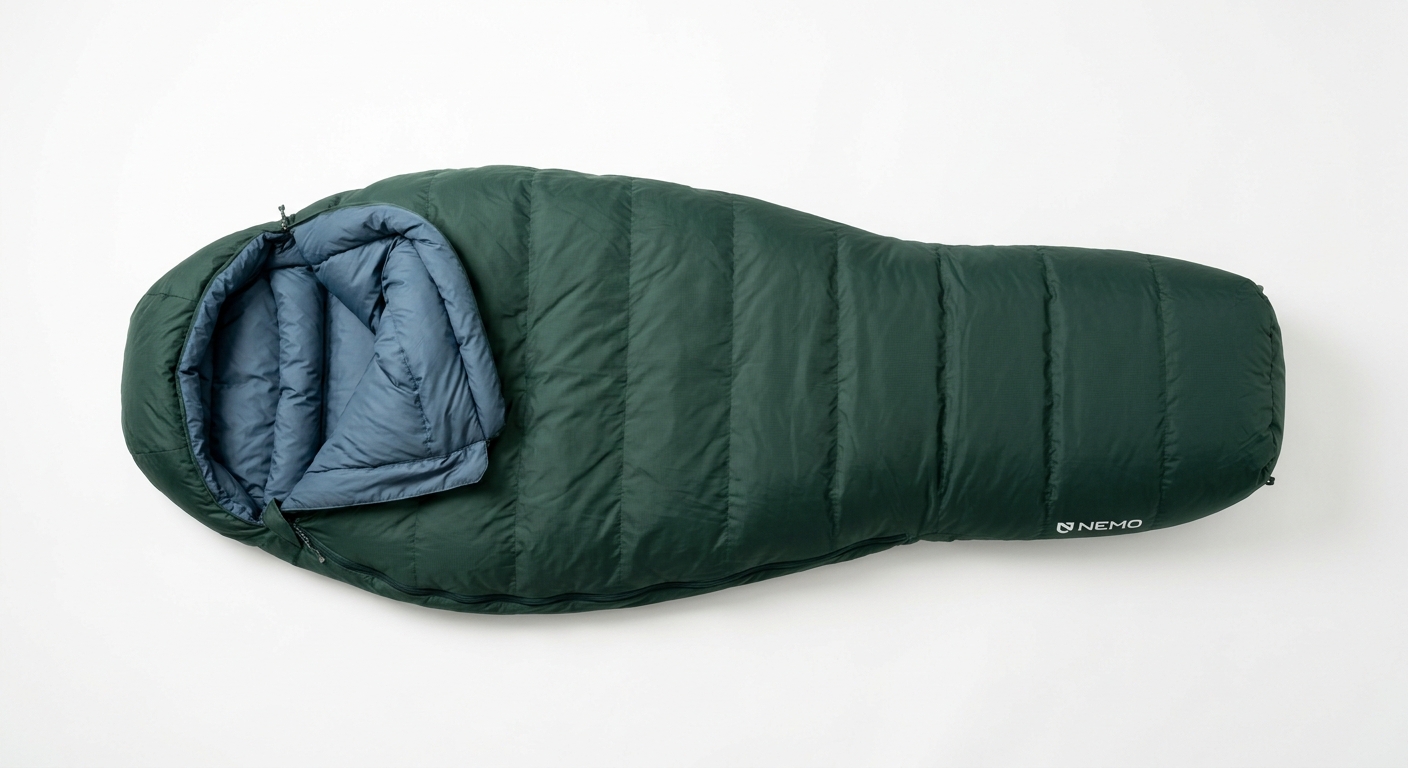
The Disco is the bag we point friends to when they ask "just tell me what to get," and the reason is shape. Most mummy bags assume you sleep on your back like a pharaoh; the Disco's spoon shape leaves actual room at the elbows and knees, so side sleepers — which is most humans — can shift and curl without wrestling the bag along for the ride. The party trick is the pair of zippered "gills" on the chest that dump heat on mild nights without letting drafts in, which effectively stretches this one bag from April to October. The 650-fill hydrophobic down isn't the loftiest on the market, and you'll feel that extra bulk in your pack, but it keeps the price tag sane for a bag that will easily survive a decade of hard use.
Price: Mid-range — check retailer for current pricing | Temp rating: 15°F limit, ~25°F comfort (ISO) | Fill: 650-fill hydrophobic down | Weight: 2 lb 11 oz | Available at: NEMO, REI, Backcountry
Best Ultralight: REI Co-op Magma Trail Quilt 30
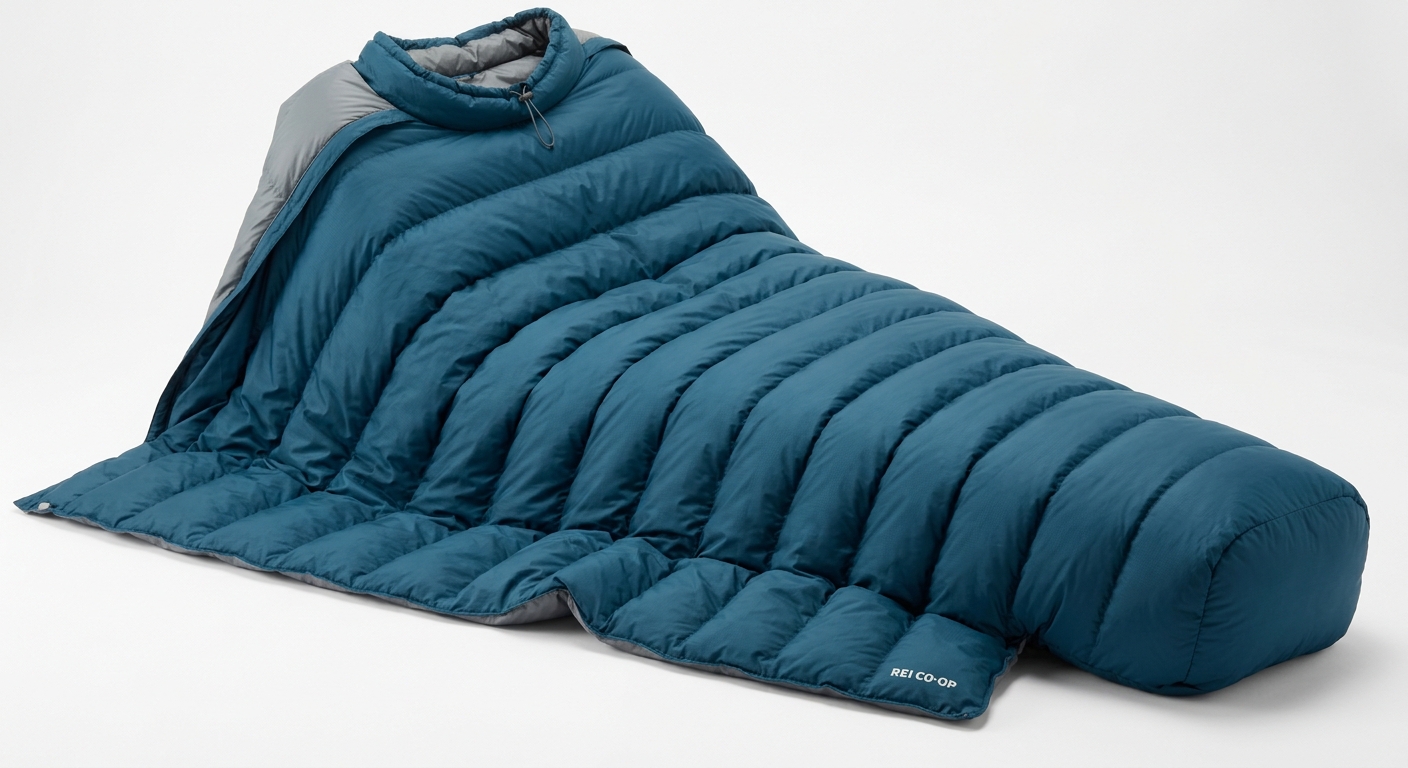
Somewhere around your third season of backpacking, you notice you never actually zip your bag all the way up — you drape it. A quilt just admits that. No hood, no zipper, no insulation squashed uselessly beneath you; it straps to your pad and puts every ounce of its 850-fill down on top, where it works. The Magma Trail Quilt weighs a pound and a quarter and packs to the size of a loaf of bread — small enough to disappear into a 40-liter pack with room left over for the good cheese. Quilts do ask a little of you — on gusty nights you'll want the pad straps snugged, and below freezing we'd rather have a real bag. If you want that real bag in ultralight form, the NEMO Riff 15 brings the spoon shape and 800-fill down at 2 lb 7 oz.
Price: Mid-range — check retailer for current pricing | Temp rating: 30°F limit, ~39°F comfort | Fill: 850-fill down | Weight: 1 lb 4 oz | Available at: REI
Best Budget Bag: REI Co-op Siesta Hooded 20
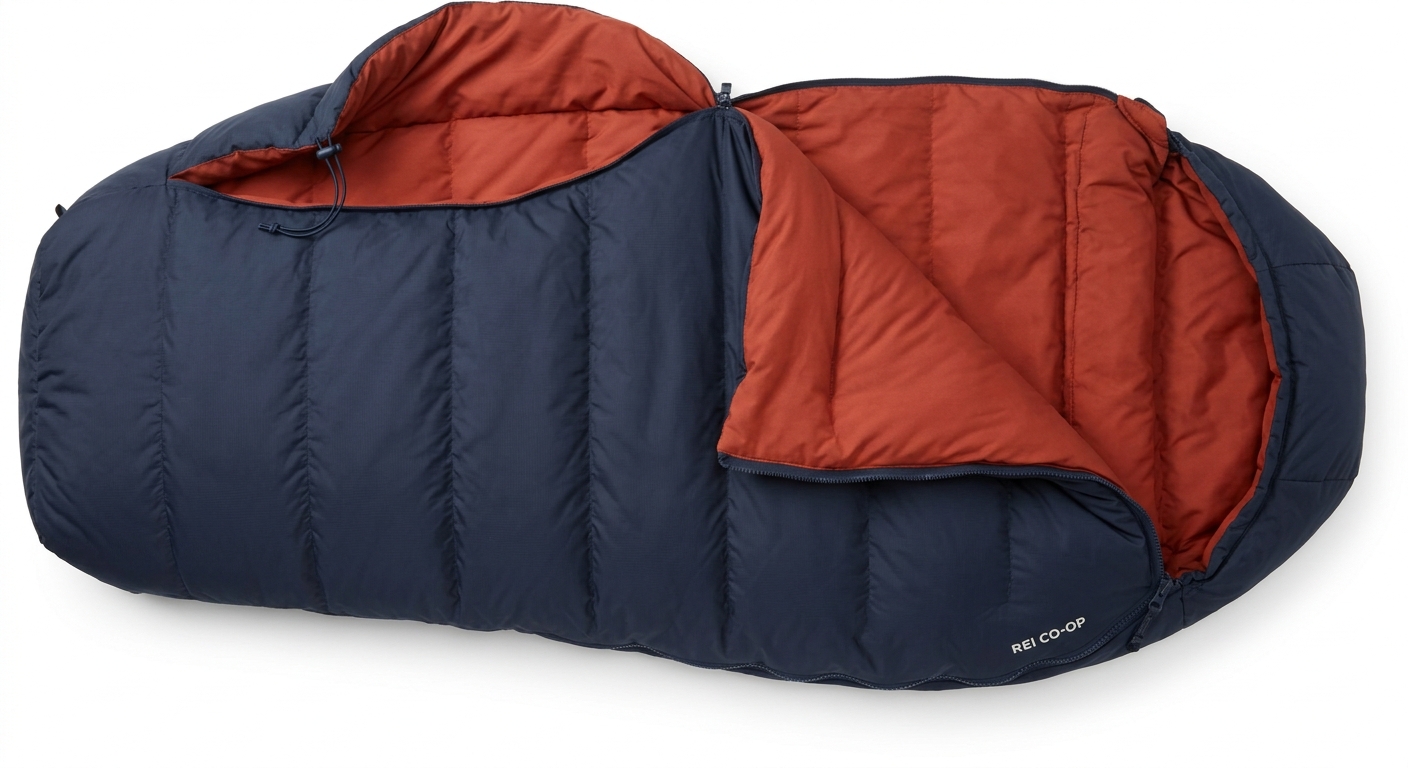
For a solidly budget price, the Siesta is a small miracle of not messing anything up. It's a big, rectangular, synthetic-fill bag with an actual hood — rare in rectangular bags and worth a solid ten degrees of real-world warmth — and it unzips fully flat into a comforter for porch naps and drive-in movies. It's heavy and it packs like a load of laundry, so it's never coming backpacking, but on a car-camping mattress it feels less like survival gear and more like bedding, and the synthetic fill means a spilled cocoa or a dewy morning is a shrug instead of a crisis. Backpacking on the same budget? The Trailmade 20 is a mummy cut from the same cloth at 2 lb 14 oz.
Price: Budget — check retailer for current pricing | Temp rating: 20°F limit, ~29°F comfort | Fill: recycled polyester synthetic | Weight: 3 lb 14 oz | Available at: REI
Best Pad, Period: NEMO Tensor All-Season
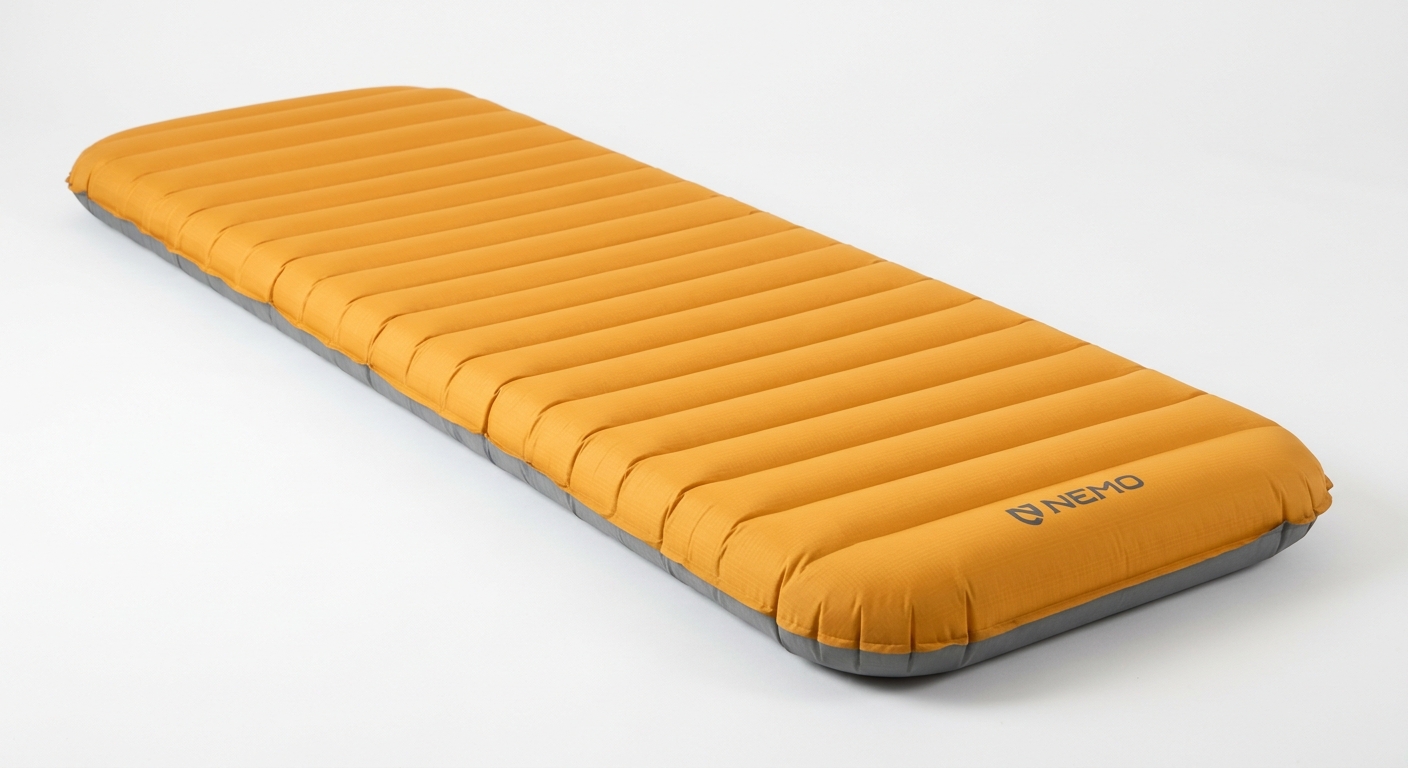
This is the pad that ends 3 AM shivering eras, and it wins on a stat sheet most people never read. Three and a half inches thick, so side sleepers' hips never touch ground. R-value 5.4 (per NEMO's ASTM testing), which is winter-grade insulation in a one-pound-two-ounce package — most pads this warm weigh half again as much. And it's *quiet*: the internal metalized films are laminated so they don't produce that potato-chip-bag crinkle that cheaper insulated pads make every time you roll over, which your tentmate will appreciate at a volume you cannot. It comes with a pump-sack that inflates it in two bagfuls of air, and yes, use the sack — the moisture from your warm breath will eventually grow mold inside the pad, and nobody wants to sleep on a science project. If you sleep hot or camp mostly in summer, the Big Agnes Rapide SL Insulated costs less, carries an R 4.8 rating, and has a soft-brushed top that's genuinely pleasant against skin.
Price: Mid-range — check retailer for current pricing | R-value: 5.4 | Thickness: 3.5 in | Weight: 1 lb 2 oz | Available at: NEMO, REI, Backcountry
Best Car-Camping Pad: REI Co-op Camp Dreamer
Nobody carries this thing anywhere — it's six and a half pounds and rolls up like a yoga mat for giants — and that's exactly the point. Four inches of self-inflating foam with a manufacturer-rated R-value of 6.6 means the ground simply stops being a factor, even frosted ground under a 20-degree bag. The stretchy knit top doesn't squeak or shed sleeping bags onto the tent floor, and the foam core means a slow leak demotes it to "slightly less plush" instead of "sleeping on rocks," which is more than any air mattress can say. Pair it with the Siesta above and you've built a budget-friendly bed you'll sleep in better than some hotels. Big Agnes makes a similar four-inch pad in double-wide if you're sharing.
Price: Budget — check retailer for current pricing | R-value: 6.6 | Thickness: 4 in | Weight: 6 lb 8 oz | Available at: REI, Big Agnes
Best for Cold Sleepers: NEMO Sonic 0
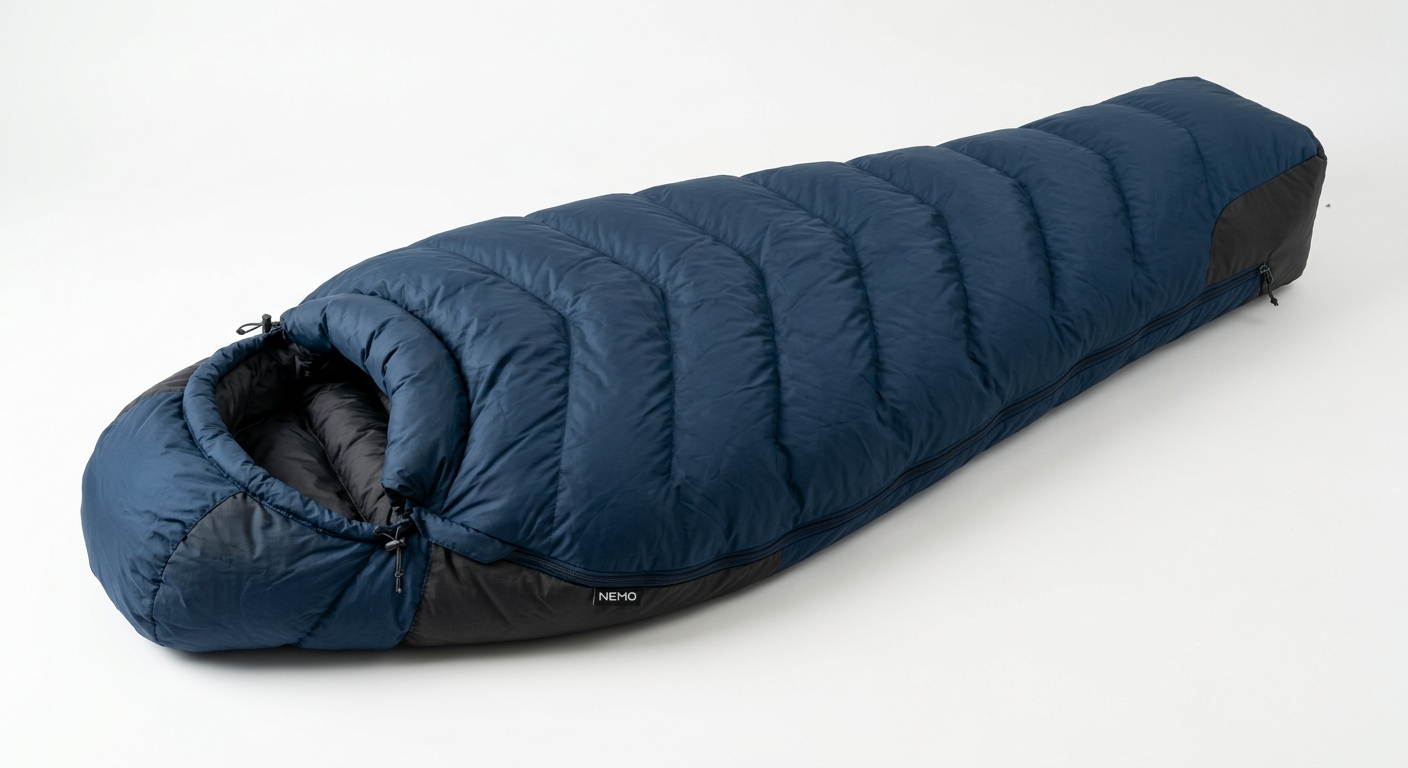
Some people read "15-degree bag, 25-degree comfort" and nod along; others read it and know from bitter experience to add another fifteen degrees for their own personal thermostat. This one's for the second group. The Sonic 0 is a genuine expedition-grade bag — 800-fill hydrophobic down, draft collar like a scarf built into the bag, thermo gills for the freak warm night — and the honest way to use it is exactly the way the label doesn't suggest: as a three-season bag for people who freeze. A cold sleeper in a 0-degree bag on a 25-degree night isn't overdoing it; they're finally comfortable. It's an investment, but so is every trip you've cut short because you dreaded the second night. And remember the sermon from the top: pair it with an R-4.5+ pad or you've bought half a solution.
Price: Premium — check retailer for current pricing | Temp rating: 0°F limit, ~14°F comfort (ISO) | Fill: 800-fill hydrophobic down | Weight: 2 lb 15 oz | Available at: NEMO, Backcountry, EMS
The Pillow Question
We'll keep this short, because the gear industry won't: the pillow is the most underrated item in your entire sleep system. People spend $500 on a bag and then balance their head on a stuff sack of damp socks and wonder why they slept badly. A real camp pillow costs $25 to $50, weighs a few ounces, and fixes the specific 4 AM neck-crick misery that no temperature rating addresses. Inflatable ones pack smallest; the compressible foam ones sleep best. If you want the free version, a fleece jacket stuffed inside a bag liner beats loose clothes by a mile because it can't unball itself at midnight. Whatever you choose, choose something. Your neck votes on whether tomorrow's hike is fun.
Put It Together and Go Sleep Somewhere Beautiful
A sleep system is three decisions — bag, pad, pillow — and the whole point of getting them right is that you stop thinking about them. The nights get good. You stop bracing for the 3 AM cold snap and start hearing the loons instead. May is right now: the ground is thawed, the bugs haven't organized yet, and the campgrounds are still quiet.
And if any of this gear ends up in your cart, going through Epic Outdoor's links to NEMO, REI, Big Agnes, Backcountry, and the rest earns you entries in our gear sweepstakes automatically — same prices, no hoops, just a bonus shot at winning a whole new kit on stuff you were buying anyway. No purchase necessary — see the Official Rules for free entry details. Sleep warm out there.